
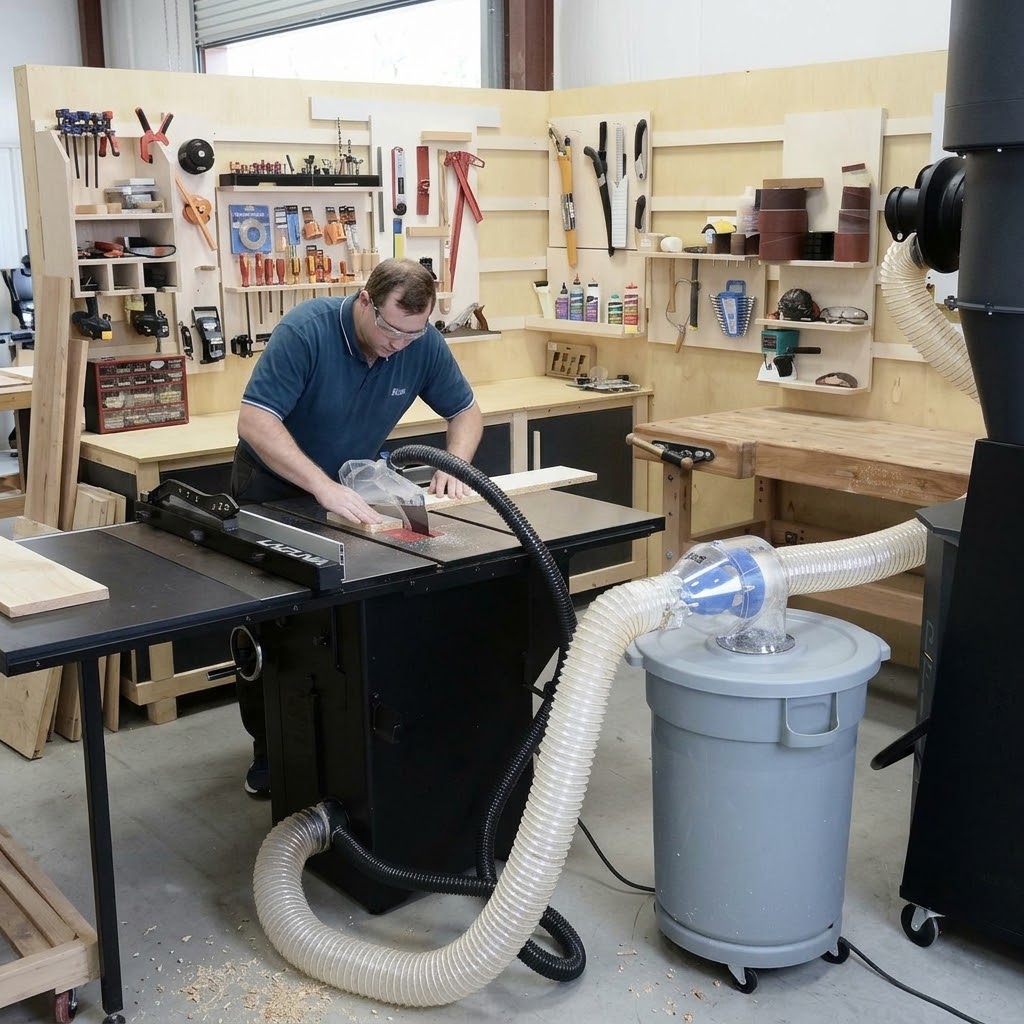
A shop vacuum can be a practical starting point for controlling sawdust in a small woodworking shop. With the right hose, tool connections, filter, and optional cyclone separator, you can collect dust from many handheld power tools without investing in a large dust collector.
However, not every woodworking machine produces the same type or volume of debris. A random orbital sander creates fine dust through a relatively small port, while a planer can eject large quantities of chips in a short time. Your collection setup needs to match the tool, not just the vacuum’s advertised horsepower.
This guide explains how to build a dust collection system with shop vac equipment, which accessories are useful, how to connect common woodworking tools, and when a dedicated dust collector is the better choice.
Can You Use a Shop Vac for Woodworking Dust Collection?
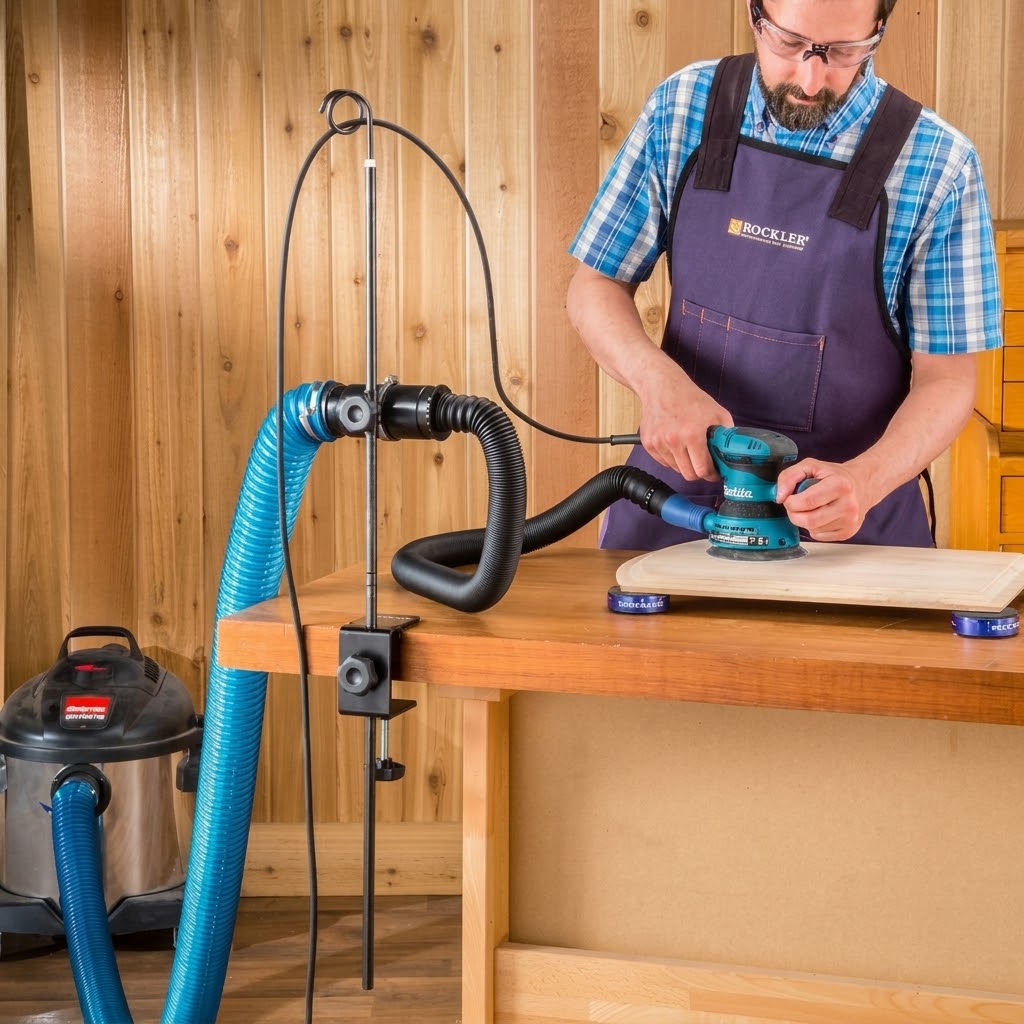
Yes. A shop vac can collect sawdust and chips from many portable woodworking tools, particularly when the tool has a compatible dust port and the hose is kept reasonably short.
A shop vacuum generally produces relatively high suction through a narrow hose. That makes it useful for applications such as:
- Random orbital sanders and finishing sanders
- Handheld routers and trim routers
- Track saws and compatible circular saws
- Small benchtop tools with suitable extraction ports
- Workbench cleanup and collecting loose debris
The limitations become more apparent when you connect machines that produce large amounts of chips or require high airflow through a large port. A thickness planer, jointer, or many stationary table saws may need a dedicated dust collector designed to move more air.
The distinction is important: suction and airflow are not the same thing. A vacuum can pull strongly through a small opening but still struggle to transport a large volume of chips through a wide duct.
For general woodworking, choose collection equipment according to the machine manufacturer’s extraction recommendations, the port size, the material being processed, and the amount of dust produced.
What You Need to Build the System
You do not necessarily need to buy everything at once. Start with the components that match your existing vacuum and tools, then add accessories when you identify a specific problem.
| Component | What it does | Is it necessary? |
|---|---|---|
| Wet/dry shop vacuum | Supplies suction and moves dust through the system | Yes |
| Vacuum hose | Connects the vacuum to the collection point | Yes |
| Tool-port adapter | Connects the hose to a machine’s dust port | Often |
| Suitable filter | Captures particles that pass through the collection stage | Yes |
| Collection bag | Captures debris inside compatible vacuums | Optional, depending on the model and application |
| Cyclone dust separator | Diverts much of the heavier debris into a separate container | Optional but useful |
| Collection bucket or drum | Holds debris separated before it reaches the vacuum | Needed for a bucket-style separator |
| Hose clamps or compatible connectors | Help secure connections and reduce leaks | As needed |
| Automatic vacuum switch | Starts and stops a compatible vacuum with a power tool | Optional |
Before purchasing adapters, check both the inside and outside diameters of your hose and tool ports. Products advertised as 1¼-inch, 1⅞-inch, or 2½-inch accessories may not fit every brand or connection style bearing the same nominal size.
Use the manufacturer’s compatibility information wherever possible.
How to Set Up a Shop Vac Dust Collection System
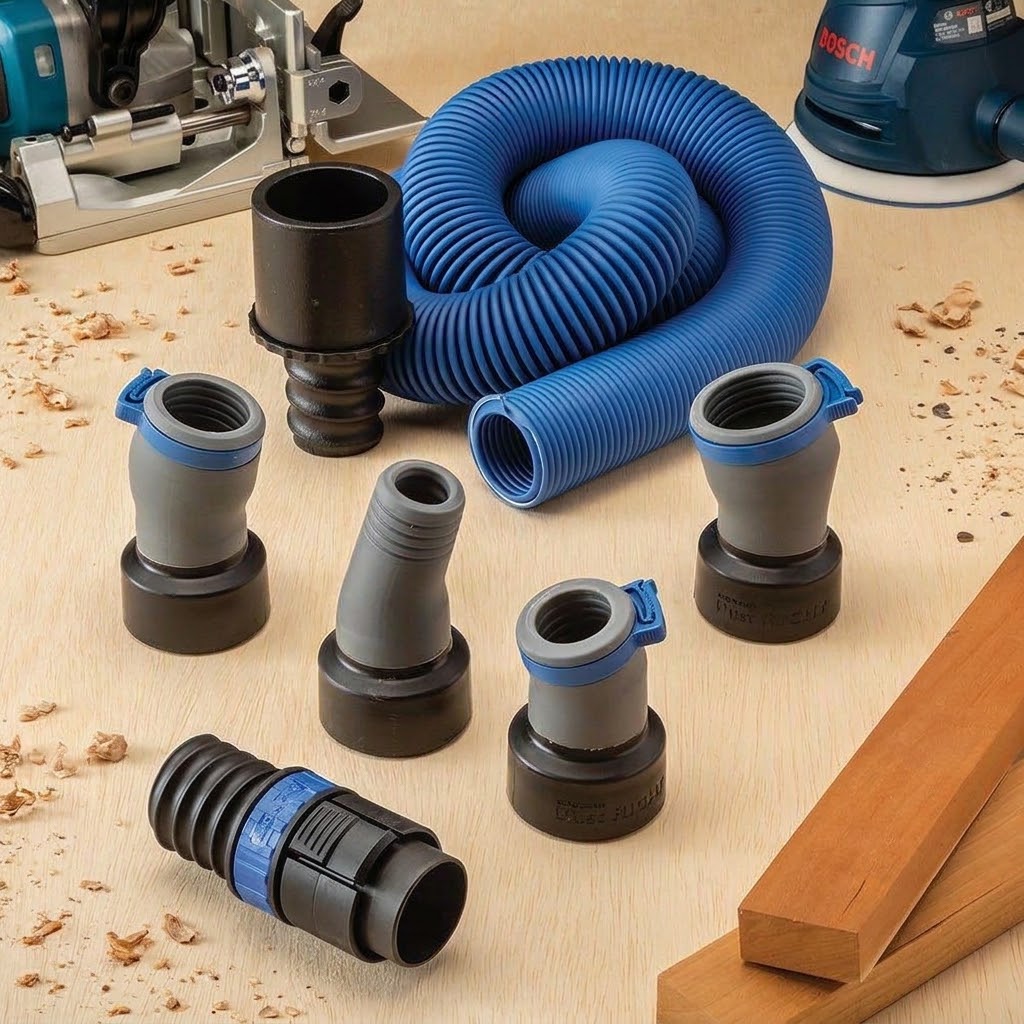
The simplest approach is to connect one tool directly to the vacuum. You can later add a separator or a dedicated collection station.
Step 1: Choose the tools you want to connect
List the machines that create dust in your workshop. Start with the tools you use most often rather than trying to connect every machine at once.
For example, a small garage shop might use the vacuum for a random orbital sander, router, track saw, and occasional cleanup.
If your main dust problem comes from a planer or a large stationary machine, assess its airflow requirements before committing to a shop-vac-only solution.
Step 2: Match the hose to the tool port
Measure the tool’s dust port and the vacuum hose connection. If the diameters differ, use a suitable adapter or reducer.
A good connection should be secure without obstructing the opening unnecessarily. Avoid a chain of reducers, narrow fittings, and sharp bends when a simpler connection is available.
Keep the hose as short and direct as practical. Long corrugated hoses, tight bends, blockages, and restrictive fittings can reduce the airflow available at the tool.
Step 3: Connect the hose securely
Attach one end of the hose to the shop vacuum and the other to the tool’s dust port.
Check that the hose cannot pull loose when you move the tool. Use compatible locking connectors, clamps, or an appropriate adapter if necessary.
Do not rely on an improvised connection that blocks the port, interferes with a moving component, or creates a tripping hazard.
Step 4: Check the filter and collection bag
Follow the vacuum manufacturer’s instructions for choosing and installing the filter and bag.
A clogged filter, full bag, or damaged seal can reduce performance. Fine wood dust also requires more attention than ordinary workshop debris because particles that pass through an unsuitable filter may be exhausted back into the room.
Use a filter rated for the material and dust you are collecting. Do not assume that a standard wet/dry vacuum filter is suitable for every fine-dust application.
Step 5: Add a cyclone separator if appropriate
A cyclone separator sits between the tool and the vacuum. The tool’s hose connects to the separator inlet, while another hose connects its outlet to the vacuum.
The airflow spins inside the separator, allowing much of the heavier material to fall into a separate bucket or container before it reaches the vacuum filter.
This can reduce filter loading and make emptying the system easier. However, the separator does not create suction, and it does not capture every fine particle.
A separator also adds resistance to the airflow. Use compatible hoses and fittings, and inspect the lid and seals for leaks.
Step 6: Test the complete setup
Before using the tool on a workpiece, check that the connections are secure, the hose is clear, and the vacuum and filter are correctly assembled.
Run the tool briefly according to its instructions. Look for loose fittings, visible dust escaping around the collection port, or a hose that collapses under suction.
If collection is poor, inspect the setup systematically rather than immediately buying a more powerful vacuum.
Should You Add a Cyclone Dust Separator?
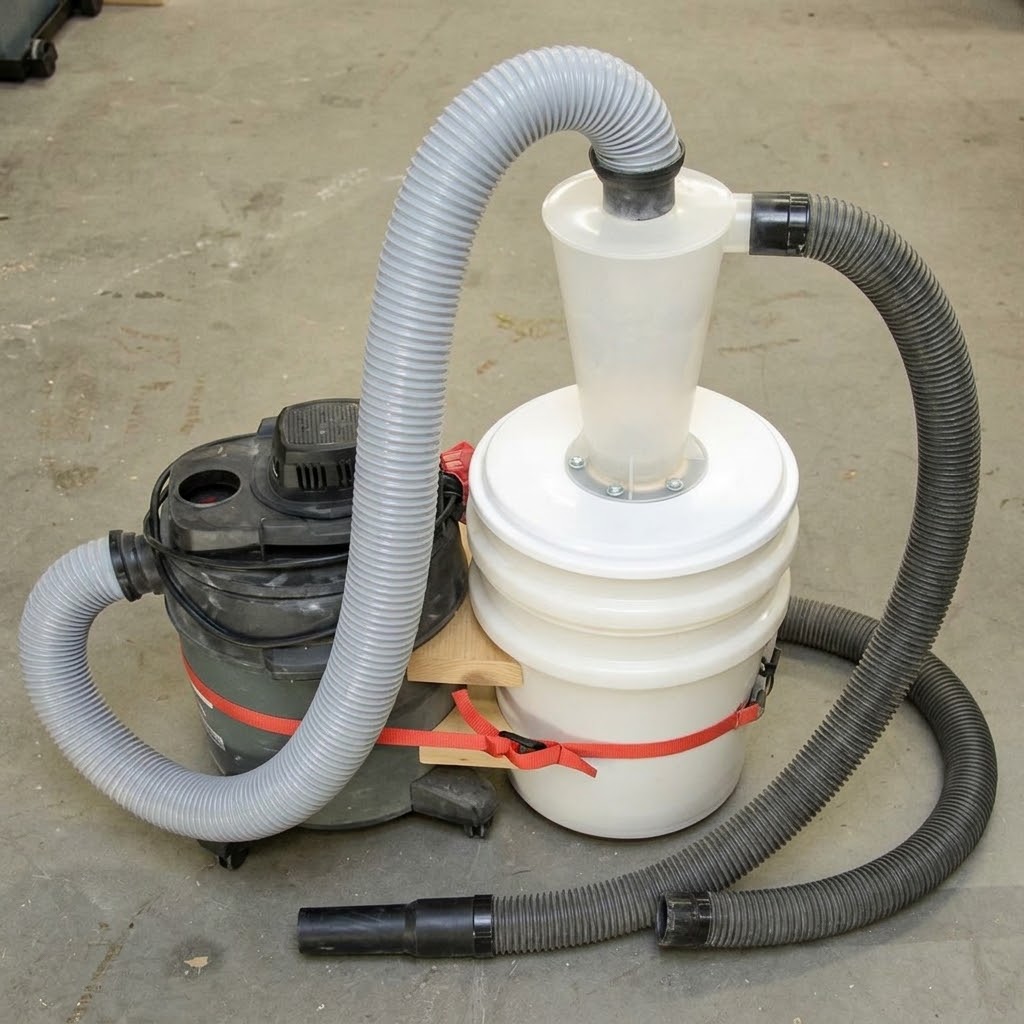
For many small workshops, a cyclone separator is a useful upgrade when sawdust repeatedly clogs the vacuum filter or fills the collection bag.
Without a separator, most of the collected debris travels through the vacuum’s hose and into its collection chamber. Depending on the vacuum design, much of the fine material then reaches the filter.
With a separator, the airflow changes direction before reaching the vacuum. Heavier chips and a substantial portion of the dust drop into a separate container, while the remaining air continues through the vacuum and its filter.
Benefits of adding a separator
- Less filter loading: The separator diverts much of the larger debris before it reaches the filter.
- Easier emptying: You can empty the separator container without opening the vacuum every time.
- More consistent performance: Reducing filter buildup can help the vacuum maintain airflow between maintenance intervals.
- Convenient collection: A clear container can make it easier to see when it needs emptying.
What a separator cannot do
A cyclone separator is not a replacement for the vacuum’s final filter. Fine particles can continue through the separator, and a leaking lid or poorly matched hose can reduce the system’s effectiveness.
The separator also does not turn a shop vacuum into a high-volume dust collector. If a machine needs more airflow than your vacuum can deliver, adding a separator will not solve that underlying limitation.
If you are new to the technology, read our guide to how a cyclone dust separator works.
Which Woodworking Tools Work Best With a Shop Vac?
The suitability of a vacuum depends on the tool, the collection port, the hose arrangement, and the amount of dust produced.
| Tool | Shop-vac suitability | Important consideration |
|---|---|---|
| Random orbital sander | Often a good fit | Match the hose to the sander’s extraction port and use suitable filtration |
| Handheld router | Often a good fit | Position the hose so it does not interfere with the cut |
| Track saw | Often a good fit | Use the recommended dust port and hose arrangement |
| Circular saw | Model-dependent | A compatible shroud or dust port helps capture material at the blade |
| Miter saw | Sometimes useful | Dust can escape from several directions, so hood design matters |
| Table saw | Limited for many models | Under-table and above-blade dust can require different collection points |
| Thickness planer | Often a poor fit for substantial chip volume | Check the manufacturer’s required airflow and port size |
| Jointer | Often better served by a dedicated collector | Large quantities of chips may overwhelm a small vacuum setup |
This table is a general guide, not a guarantee for every machine. Follow the manufacturer’s requirements for your specific tool.
Table saws: understand the two collection points
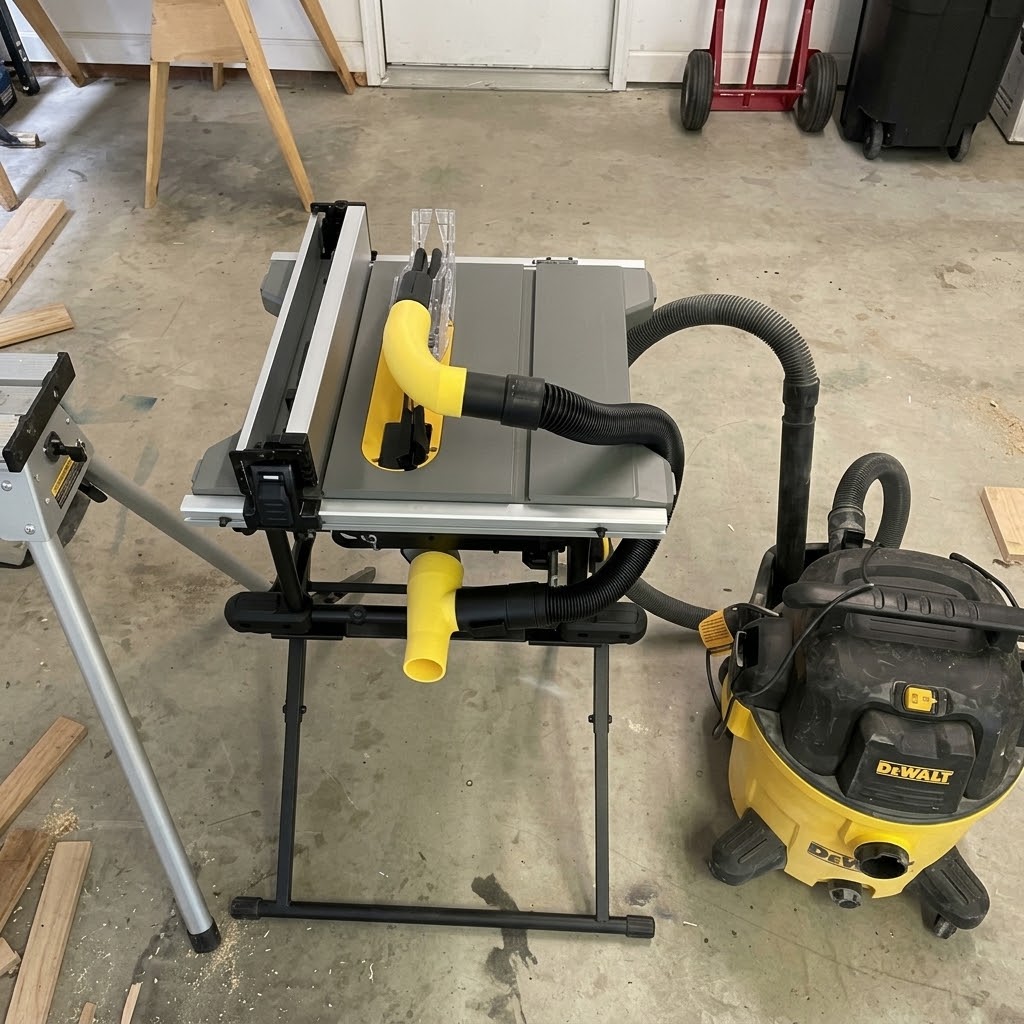
A table saw can release debris below the table around the blade housing and above the table as the blade exits the workpiece.
A vacuum connected to only one port may leave a significant amount of dust uncaptured. Some saws have a lower port, an upper blade-guard port, or both. Others need a carefully designed hood or enclosure to improve capture.
A shop vacuum may help on a compatible small saw, but it is not automatically adequate for every table saw. If the machine requires substantially more airflow, consider a dedicated dust collector.
Sanders and routers: prioritize the connection
Handheld tools often have smaller extraction ports, which can make them better candidates for a shop vacuum.
Make sure the adapter does not block the port or place excessive strain on the tool. For sanding, remember that visible dust capture does not prove that all fine airborne particles are being controlled.
How to Improve Dust Collection Performance
If your setup is not collecting dust well, use this checklist before replacing the vacuum.
Keep the hose short and direct
Long hoses and multiple tight bends add resistance. Position the vacuum close enough to the tool to avoid unnecessary hose length, while keeping the machine and workspace safe and accessible.
Remove restrictive fittings
Use the fewest practical adapters. A poorly matched reducer can become a bottleneck, particularly when the hose is already narrow or the tool produces a large amount of debris.
Check for air leaks
Inspect the hose joints, separator lid, adapter connections, and vacuum seals. Leaks can reduce the airflow available at the collection point.
Maintain the filter
Clean or replace filters according to the manufacturer’s instructions. Do not use compressed air or a cleaning method that the manufacturer prohibits, especially where fine dust could become airborne.
Empty the container before it becomes overfilled
A full collection container can create mess and interfere with the separator’s operation. Check the container regularly and empty it before debris reaches a level that affects performance.
Improve the collection hood
The hose and vacuum are only part of the system. The hood or port must capture dust close to where it is generated. If dust escapes before reaching the hose, a stronger vacuum alone may not fix the problem.
Common Shop-Vac Dust Collection Problems
The vacuum loses suction
Check for a clogged hose, a full container, a loaded filter, an air leak, or a restricted adapter. If you have a separator, check that its inlet, outlet, and lid are assembled correctly.
Sawdust reaches the vacuum filter
Some fine particles can pass through a separator by design. Check the separator’s seals and internal arrangement, and confirm that the vacuum uses a suitable filter and compatible collection bag for the material.
The bucket collapses
A container that cannot withstand the vacuum’s pressure may deform when the system runs. Use a separator container designed for the application and follow the manufacturer’s instructions. Do not assume that an ordinary thin-walled bucket is safe simply because its lid fits.
Dust escapes into the workshop
The tool port may not capture dust effectively, the hose may be disconnected, or the vacuum’s filter may be unsuitable or damaged. Check the collection hood, connections, and filter before continuing.
The vacuum is too loud
Shop vacuums can be noisy. Position the vacuum safely, maintain its filter and hose, and consider a model designed for quieter operation if noise is a major concern. Never enclose a running vacuum in a way that blocks cooling airflow or creates a fire hazard.
Shop Vac vs. Dedicated Dust Collector: When Should You Upgrade?
A shop vacuum is a reasonable starting point for a small shop that uses portable tools and collects modest amounts of debris.
A dedicated dust collector becomes more attractive when you routinely use machines with larger ports, produce large quantities of chips, or need a collection system that serves several stationary woodworking machines.
Consider upgrading if:
- Your machine’s stated airflow requirement exceeds what the vacuum can supply.
- A planer or jointer produces chips faster than the vacuum can transport them.
- You need a collection system for multiple stationary machines.
- Dust repeatedly escapes even after improving the hose, port, hood, and connections.
- Your workshop needs more effective source capture than the current setup can provide.
Do not compare machines using peak horsepower alone. Airflow under operating conditions, static pressure, hose diameter, filter loading, and the design of the collection hood all affect performance.
For a broader comparison, see Dust Separator vs. Shop Vac: What’s the Difference?.
Safety: Do Not Treat a Shop Vac as Complete Dust Protection
Wood dust is not just a housekeeping problem. OSHA identifies wood dust exposure as a health hazard associated with respiratory effects and other adverse health outcomes. Fine dust can also contribute to combustible-dust hazards when it accumulates under the wrong conditions.
For safer woodworking:
- Capture dust at the source whenever possible.
- Use a filter appropriate for the dust and vacuum.
- Maintain the collection system and inspect damaged hoses, filters, and seals.
- Avoid blowing accumulated wood dust into the air with compressed air.
- Clean settled dust using an appropriate method rather than allowing it to build up.
- Use suitable respiratory protection where needed; a shop vacuum does not eliminate every exposure.
OSHA’s wood dust guidance provides additional information about exposure risks and dust-control measures.
Frequently Asked Questions
Can I use a regular shop vac for woodworking dust?
Yes, for many portable tools with compatible extraction ports. However, the vacuum must have suitable filtration, and it may not provide enough airflow for machines that generate large quantities of chips.
Does a cyclone separator increase suction?
No. A separator does not generate suction. It diverts much of the heavier debris into a separate container before the air reaches the vacuum. Because it adds resistance, the complete system’s performance depends on the separator, hoses, fittings, and vacuum working together.
Is a dust separator necessary for a shop vac?
No. You can connect a vacuum directly to a compatible tool. A separator becomes useful when you want to reduce filter loading, collect larger debris separately, or make emptying easier.
What hose size should I use?
Choose a hose that matches the tool’s port and the vacuum’s connection, using a compatible adapter where necessary. Keep the hose as short and direct as practical. A larger hose is not automatically better if it cannot connect properly or if the tool is designed around a smaller port.
Can a shop vac collect dust from a table saw?
It can help with some table saws, especially smaller models with compatible dust ports. However, table saws can release dust above and below the table, and many require more airflow than a shop vacuum can provide. Check the saw manufacturer’s recommendations.
Can I connect multiple tools to one shop vacuum?
You can design a setup with branches and blast gates, but opening multiple branches divides the available airflow. For a small vacuum, it is generally more practical to operate one collection point at a time unless the system has been designed and tested for simultaneous use.
Does a shop vac remove fine wood dust from the air?
A shop vac primarily collects dust through a connected hose or hood. Its ability to capture and retain fine particles depends on the tool’s source capture, the filter, the seals, and the system’s overall design. It should not be treated as a substitute for proper dust control or appropriate respiratory protection.
Final Thoughts
A well-planned shop-vac setup can be a useful and relatively affordable way to collect dust from handheld tools in a small woodworking shop. Start with a compatible hose and tool connection, maintain the filter, and consider a cyclone separator if you frequently collect chips and sawdust.
The most important principle is to match the collection system to the machine. A shop vacuum is often a sensible choice for sanders and routers, but larger machines may need a dedicated dust collector with greater airflow.
If you’re building your first setup, begin with one tool, test the collection performance, and expand only when you understand what your workshop actually needs.
Related reading