
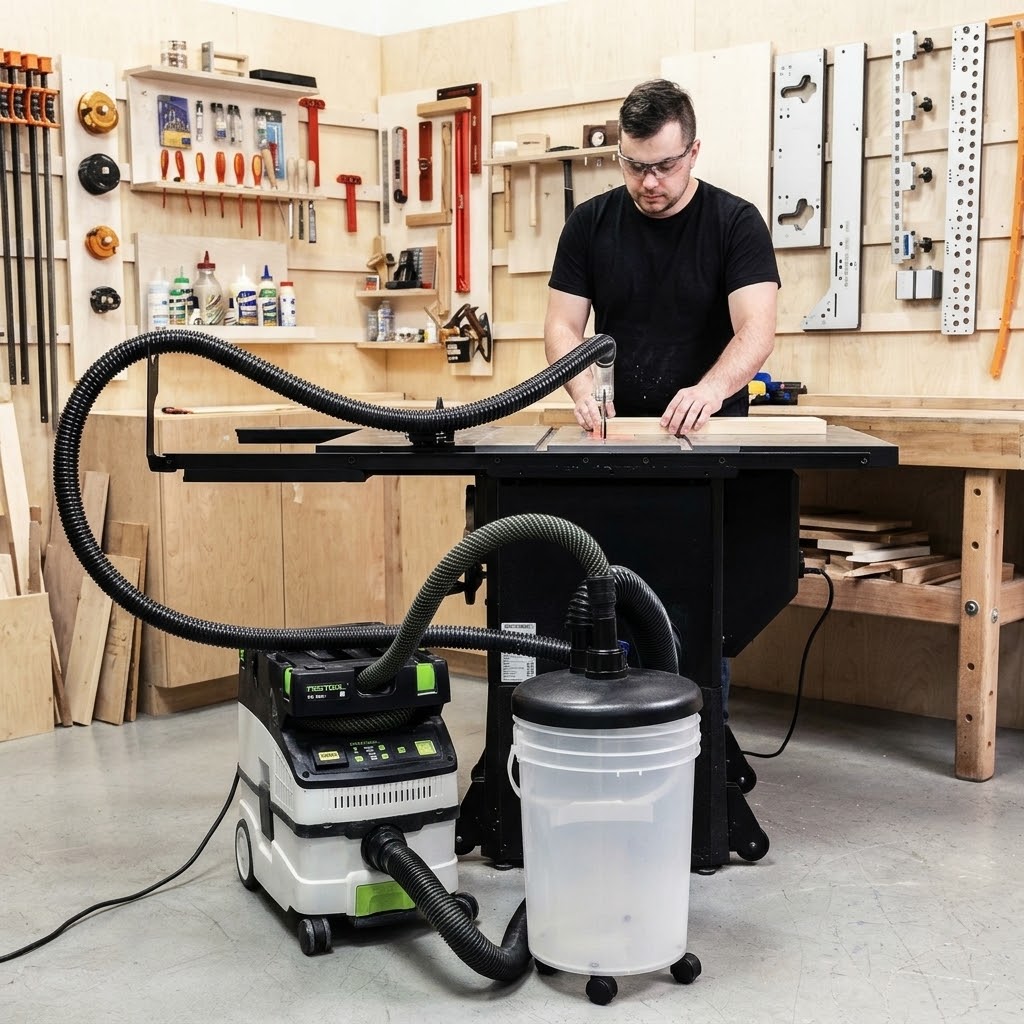
If you’re setting up a woodworking shop or improving your workshop cleanup system, understanding the differences in a dust separator vs. shop vac can help you decide whether you need a dust separator, a shop vac, or both.
The main difference is simple: a shop vac creates suction and collects debris, while a dust separator removes much of that debris from the airflow before it reaches the vacuum. They perform different jobs, which is why many woodworkers use them together.
However, a shop vac with a cyclone separator is not always the best solution for every tool. Sanders, miter saws, table saws, and other woodworking machines can have different dust collection requirements.
In this guide, you’ll learn how dust separators and shop vacs work, how they compare with dust extractors and dust collectors, when adding a separator is worthwhile, and how to choose the right setup for your workshop.
Dust Separator vs. Shop Vac: Quick Comparison
| Feature | Shop Vac | Dust Separator |
|---|---|---|
| Main purpose | Creates suction and collects debris | Separates much of the debris from the airflow |
| Creates suction | Yes | No, not by itself |
| Collects debris | In its own tank | In a separate bucket or container |
| Reduces debris reaching the vacuum filter | Only through its filtration system | Yes, when properly matched and installed |
| Helps reduce filter loading | Depends on the vacuum and debris | Often, especially with larger particles |
| Requires a separate vacuum | No | Usually |
| Takes up extra space | No additional separator space | Yes |
| Best use | Cleanup and compatible power tools | Extending the capacity of a compatible collection setup |
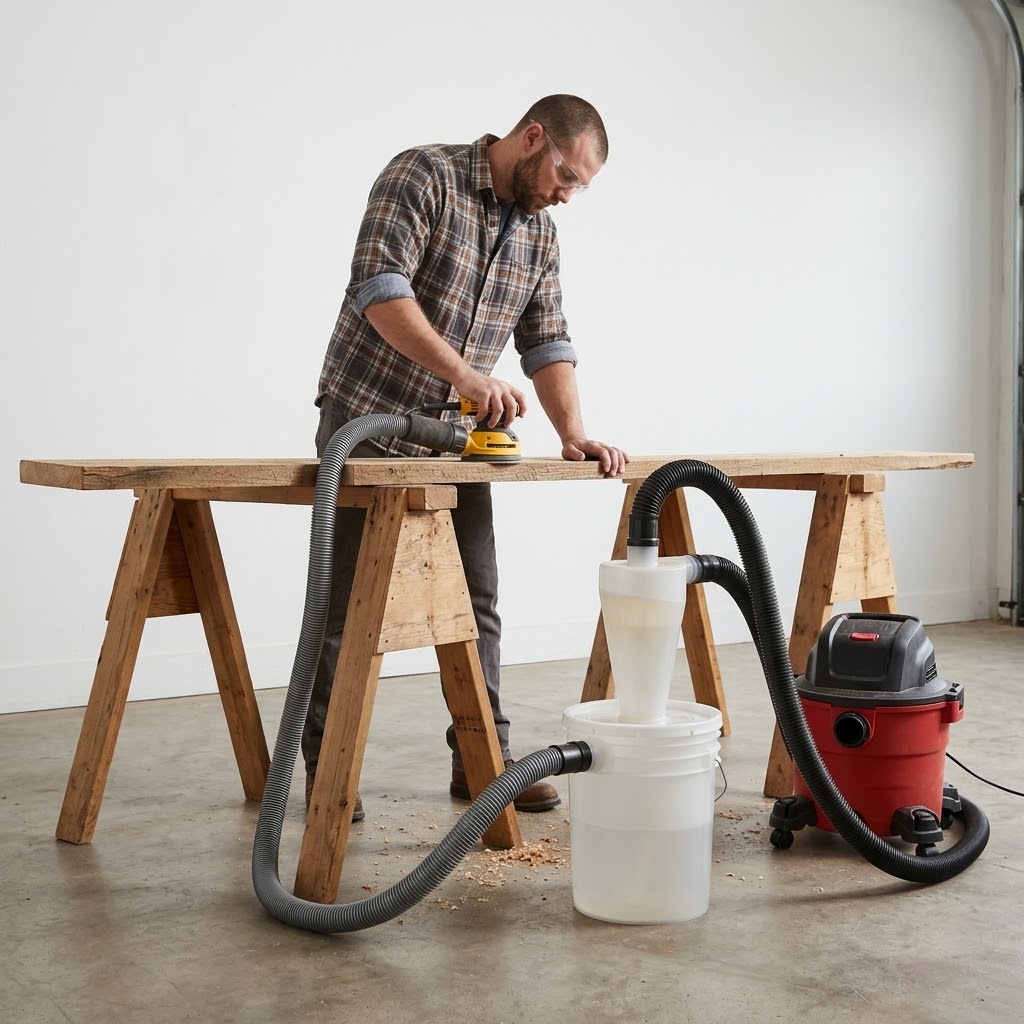
The short answer: A shop vac is the machine that moves the air. A dust separator is an accessory that separates debris from that moving air. If your vacuum collects a lot of sawdust and wood chips, adding a compatible separator may make your setup more convenient.
What Is a Shop Vac?
A shop vac, also called a wet/dry vacuum, is a portable vacuum designed for workshop cleanup and other demanding tasks. Depending on its design and attachments, it can collect sawdust, wood chips, dirt, and certain liquid spills.
Unlike a typical household vacuum, many shop vacs have larger collection tanks, rugged hoses, and accessories intended for garages, workshops, construction sites, and DIY projects.
How Does a Shop Vac Work?
A motor drives a fan that creates a pressure difference, drawing air and debris through the hose. The debris enters the collection tank, while the air passes through the vacuum’s filtration system before being exhausted.
The exact airflow, suction performance, and filtration efficiency depend on the model, filter, hose, and operating conditions.
Two characteristics are particularly important:
- Airflow: The volume of air the vacuum moves. Adequate airflow helps transport dust and debris through the hose.
- Static pressure or suction: The vacuum’s ability to overcome resistance in the hose, fittings, filters, and collection system.
These characteristics work together. A vacuum with impressive suction at a restricted inlet does not necessarily deliver sufficient airflow at a woodworking tool.
Advantages of a Shop Vac
- Portable and relatively easy to store.
- Useful for general workshop cleanup.
- Compatible with many handheld power tools when the connections and performance are suitable.
- Available in a wide range of tank sizes and filtration configurations.
- Can be used without purchasing a separate separator.
Limitations of a Shop Vac
A shop vac’s collection tank can fill quickly when you’re producing large amounts of sawdust. As dust accumulates on the filter, airflow may also decrease, depending on the filter and vacuum design.
A standard shop vac may not provide the airflow required by some stationary woodworking machines. Its filtration system may also be inadequate for your particular fine-dust control needs.
For those reasons, choosing a shop vac involves more than comparing motor horsepower or tank capacity. Consider the actual airflow, filter specifications, hose size, tool compatibility, and intended use.
What Is a Dust Separator?
A dust separator is a device that removes a portion of the debris from an airstream before it reaches the vacuum or dust collection system. Many workshop separators use a cyclone design, while others use different separation methods.
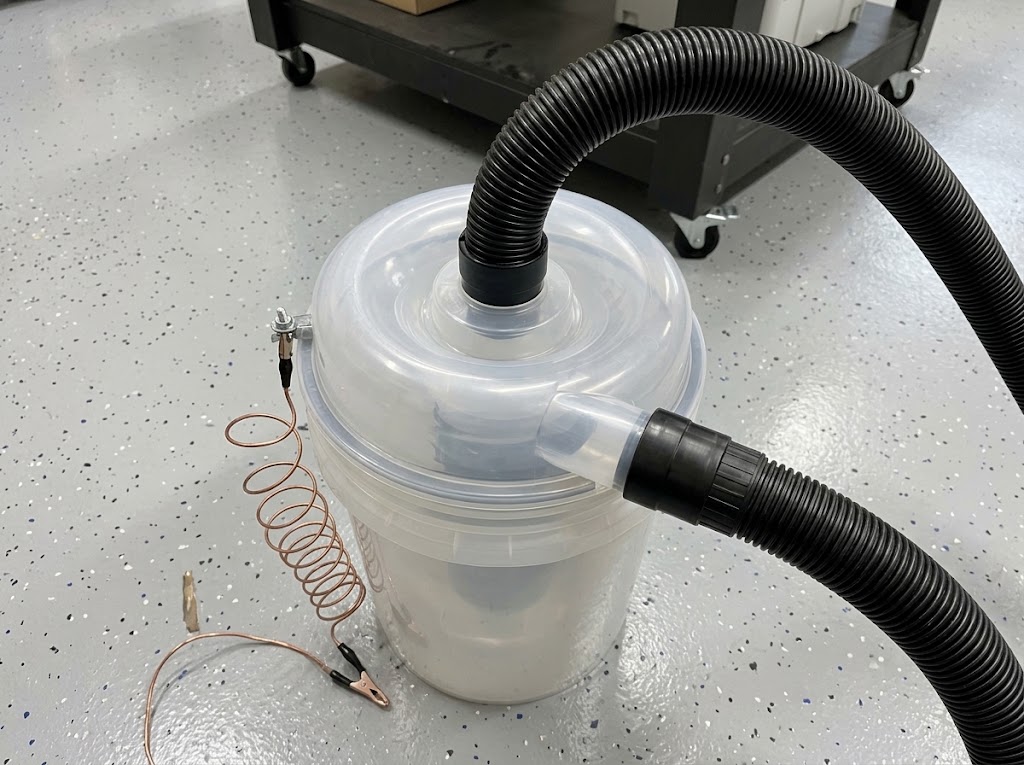
A common setup consists of a cyclone separator mounted on a lid or container, connected between a woodworking tool and a shop vac.
How Does a Cyclone Dust Separator Work?
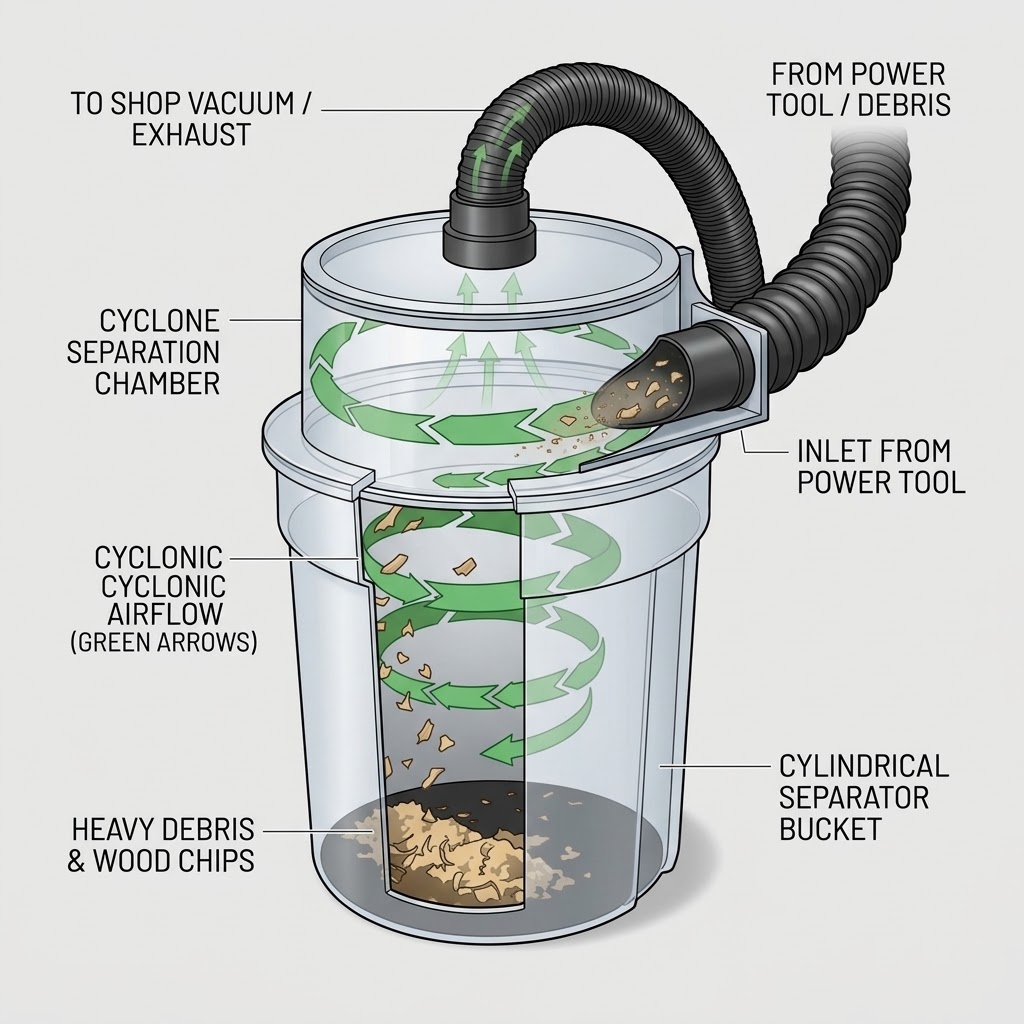
In a typical cyclone separator, dusty air enters a shaped chamber and begins to rotate. The airflow pattern encourages heavier particles, such as wood chips and coarse sawdust, to move toward the chamber’s outer wall and fall into a collection container.
The air then travels toward the separator’s outlet and continues to the vacuum. Some fine particles remain suspended in the airflow and may pass through to the vacuum filter.
The separation efficiency depends on the cyclone design, particle size, airflow, leaks, and other system conditions.
Advantages of a Dust Separator
- Collects much of the debris before it reaches the vacuum.
- Can reduce how quickly the vacuum filter loads with larger particles.
- Adds a separate collection container that can be easier to empty.
- May help maintain more consistent vacuum performance between filter cleanings.
- Can be a useful upgrade for woodworking tasks that produce substantial chips and sawdust.
Limitations of a Dust Separator
- Does not create suction on its own.
- Adds equipment, connections, and space requirements.
- May introduce additional airflow resistance.
- Needs properly sealed connections to work effectively.
- Does not capture every particle, particularly all fine airborne dust.
- Requires a suitable container that can withstand the vacuum’s pressure without collapsing.
A separator is not automatically beneficial in every setup. If your current vacuum collects very little debris, your filter rarely loads, or your available space is limited, the extra equipment may offer less value.
Dust Separator vs. Shop Vac: The Main Differences
1. Purpose and Function
A shop vac creates the airflow that draws debris into the system. A dust separator uses that airflow to separate some of the debris before it reaches the vacuum.
The two devices are complementary rather than direct alternatives.
If you need a machine for cleanup and dust collection, you need an appropriate vacuum or dust collection system. If you want to reduce the amount of debris reaching that machine, a separator may be worth considering.
2. Filter Maintenance
Without a separator, the vacuum’s filter may receive a substantial amount of the dust and debris drawn through the hose. Depending on the material and filter design, this can increase the need for cleaning or replacement.
A suitable cyclone separator can remove much of the larger debris before it reaches the vacuum. That can reduce filter loading and make maintenance more convenient.
However, fine dust can still pass through the separator. You should continue to inspect and maintain the vacuum filter according to the manufacturer’s instructions.
Important: A separator does not make an unsuitable filter adequate for fine-dust control.
3. Collection Capacity
A shop vac stores debris in its own tank. When the tank becomes full, you must stop and empty it.
A separator adds a second collection container. The container collects the material separated from the airflow, while the vacuum tank receives whatever passes through.
This arrangement can be particularly useful when planing, routing, or performing other tasks that produce large amounts of chips and coarse dust.
Actual capacity depends on the separator, container size, debris type, and how much usable space remains in the container. Do not fill it beyond the manufacturer’s recommended level.
4. Airflow and Suction
Adding a separator introduces another chamber, additional hose connections, and potential restrictions. These can affect the airflow available at your tool.
The result depends on the vacuum, separator, hose diameter, hose length, fittings, and whether the system is airtight.
For example, a separator with poorly matched ports may require restrictive adapters. A long, narrow hose or a clogged filter can also reduce performance.
Before buying a separator, check the manufacturer’s recommended airflow and connection sizes. After installation, confirm that your tools still collect dust effectively.
5. Cost and Setup Complexity
A shop vac alone is usually the simplest arrangement. You need the vacuum, a suitable hose, and compatible attachments.
Adding a separator may require:
- The separator body or cyclone lid.
- A collection bucket or container.
- Hoses and adapters.
- Seals, clamps, and mounting hardware.
- Additional floor or wall space.
A DIY separator can reduce the initial cost, but the total expense depends on the quality of the components and the work needed to make the connections airtight.
Compare the complete cost of the setup rather than the separator price alone.
6. Portability and Convenience
A compact shop vac is often easy to move between work areas. A separator and a large collection container make the setup bulkier.
Some separators are designed to mount directly on a container, while others can be incorporated into a mobile cart. Your best choice depends on whether you frequently move the vacuum or keep it connected to a particular machine.
If portability is important, consider the complete assembled footprint and how easily the hoses can be stored.
7. Fine Dust Filtration and Air Quality
This is one of the most important distinctions.
A cyclone separator primarily separates material from the airflow; it is not a substitute for a properly selected final filter. Some fine dust can pass through a separator and return to the vacuum.
Wood dust can present respiratory and other health hazards. The U.S. Occupational Safety and Health Administration provides guidance on wood-dust hazards and control measures.
For better dust control, use effective extraction at the source, a filtration system appropriate for the task, and suitable respiratory protection when needed. Do not assume that a separator alone makes workshop air safe.
Reference: OSHA — Wood Dust: Potential Hazards and Solutions
Dust Separator vs. Shop Vac vs. Dust Extractor vs. Dust Collector
These terms are sometimes used interchangeably, but they describe different equipment.
| Equipment | What it does | Typical applications |
|---|---|---|
| Shop vac | Provides suction and collects debris | General cleanup and compatible portable tools |
| Dust separator | Removes some debris before it reaches the vacuum or collector | Pre-separation of chips and sawdust |
| Dust extractor | Extracts dust at a tool and may include specialized filtration and filter-cleaning features | Sanders, saws, and other compatible power tools |
| Dust collector | Moves air through a collection system designed for woodworking machines | Stationary machines and larger dust-producing tasks |
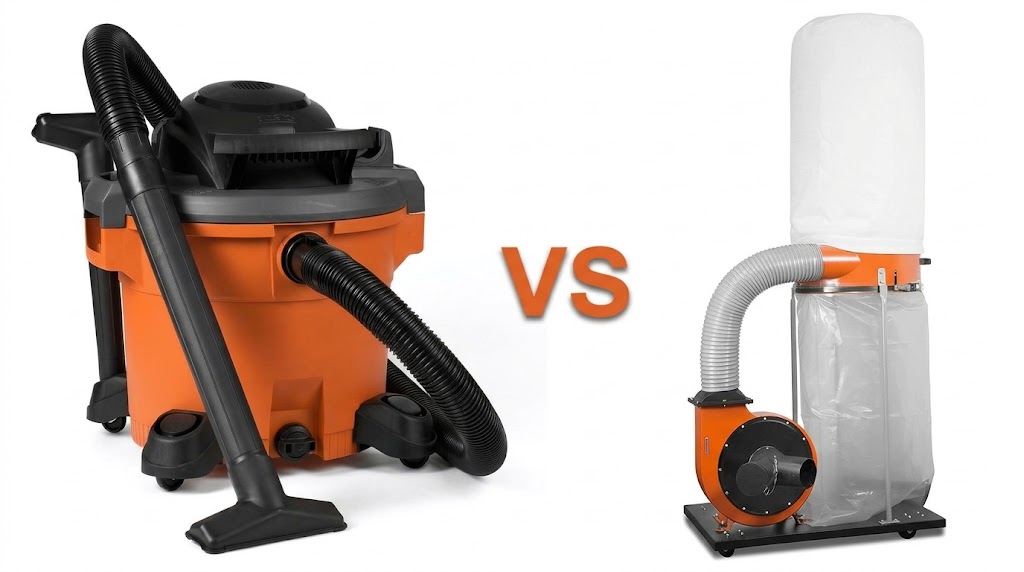
When Is a Dust Extractor Better Than a Shop Vac?
A dust extractor may be more appropriate when you’re regularly connecting to a sander or another power tool that produces fine dust. Depending on the model, extractors may offer better-matched airflow, filtration options, tool activation, and filter-cleaning features.
However, not every extractor has the same specifications. Check the actual filter class, airflow, intended use, and manufacturer’s guidance.
When Is a Dust Collector Better Than a Shop Vac?
A dedicated dust collector is often worth considering for stationary machines that require more airflow than a typical shop vac can provide.
Table saws, planers, jointers, and similar machines may produce a substantial volume of chips and dust. A suitable collector and properly designed ductwork can be a better fit than a small vacuum.
The correct choice depends on the machine’s collection ports, airflow requirements, the number of tools connected, and how the system is configured.
Can You Use a Dust Separator Without a Shop Vac?
A basic cyclone separator cannot effectively collect debris without airflow. It needs a source of moving air, such as a shop vac or compatible dust collector.
Some complete dust collection systems incorporate separation and suction in one machine. In those cases, the separation component is part of a larger system rather than a standalone accessory.
If you’re considering a standalone cyclone, check what equipment is required to operate it and whether the product is designed for your existing vacuum or collector.
Which Setup Is Best for Different Workshop Tools?
The right system depends on what you’re collecting and how often you use each tool.
| Workshop task | Setup to consider | Why |
|---|---|---|
| General floor and bench cleanup | Shop vac | Convenient for occasional cleanup |
| Small DIY woodworking projects | Shop vac, with an optional compatible separator | Portable and relatively simple |
| Random-orbit sanding | Suitable dust extractor or compatible vacuum and filtration | Fine dust collection is important |
| Routing and similar tasks | Compatible vacuum or extractor, optionally with a separator | A separator may collect chips and reduce filter loading |
| Miter saw use | Tool-compatible extraction or dust collection system | The saw’s dust ports and airflow needs matter |
| Table saw used regularly | Properly sized dust collector or suitable engineered collection system | A shop vac may not deliver the airflow required |
| Planer or jointer | Suitable dust collector | High volumes of chips can quickly overwhelm a small vacuum setup |
| Multiple stationary machines | Properly designed dust collection system | Ducting, airflow, and simultaneous use must be considered |
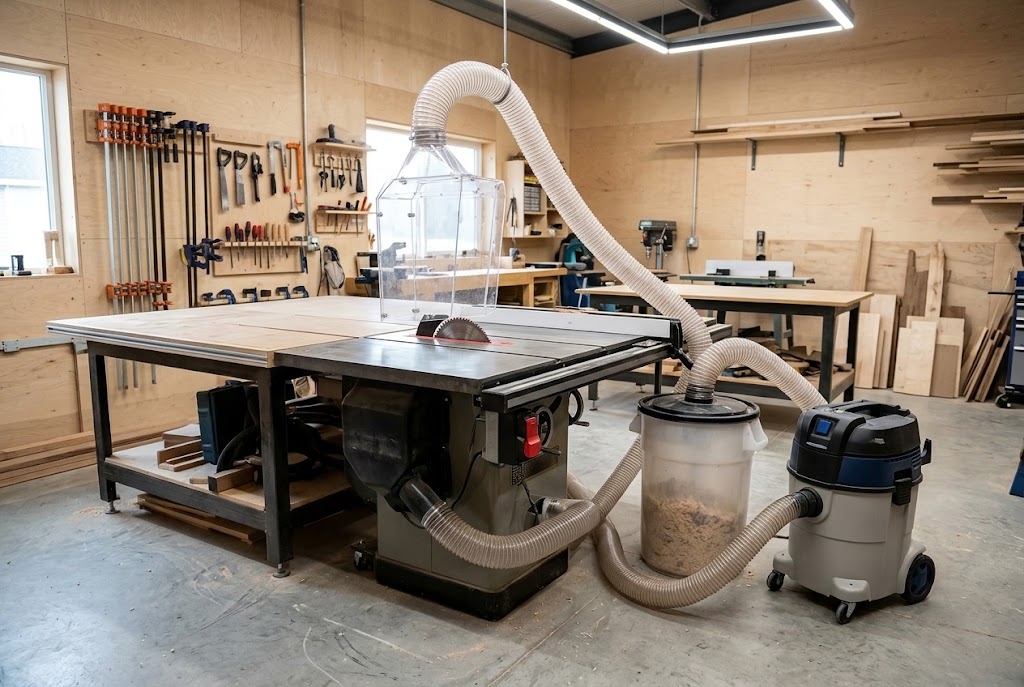
These recommendations are general starting points. Always check the tool and collection-system specifications before choosing equipment.
When Is Adding a Dust Separator Worth It?
A separator is most useful when the amount of material you collect justifies the extra equipment.
Consider a Separator If:
- You frequently collect large amounts of sawdust or wood chips.
- Your vacuum tank fills quickly.
- Larger debris loads your filter frequently.
- You want a separate container that is convenient to empty.
- Your existing vacuum provides adequate airflow for the tool.
- You have enough space for the separator and container.
You May Not Need One If:
- You mainly vacuum small amounts of dust and debris.
- Your existing filter maintenance is already manageable.
- You rarely fill the vacuum tank.
- Your workshop has very limited storage space.
- The separator and fittings would introduce too much restriction.
- You actually need a different type of dust collection system.
Before spending money, identify the problem you want to solve. If your main problem is inadequate airflow at a table saw, adding a cyclone separator to an undersized shop vac is unlikely to be the right solution.
Dust Separator Products to Consider
If you’ve decided that a separator makes sense, compare models based on their intended use, connection sizes, airflow requirements, container compatibility, and overall cost.
The following are examples to research, not products that have been independently tested for this article.
1. Oneida Air Systems Dust Deputy
The Dust Deputy family includes cyclone separators designed for different vacuum and collection configurations. The DIY versions are intended for people building or adapting a compatible dust collection setup.
Why consider it:
- Offers a way to add cyclone pre-separation to a compatible vacuum.
- Can be incorporated into a custom cart or container setup.
- May be useful when a shop vac regularly collects large amounts of debris.
What to check before buying:
- The exact Dust Deputy model and its inlet and outlet sizes.
- The manufacturer’s airflow recommendations.
- Whether your vacuum and hoses are compatible.
- The container’s strength and sealing.
- Whether you need static-dissipative or other specific system features.
View the manufacturer’s product information: Oneida Air Systems Dust Deputy
Check current listings on Amazon
2. Rockler Dust Right Dust Separator
Rockler’s Dust Right product range includes dust collection accessories for workshop setups. Before choosing a specific separator, verify the exact model, port size, included components, and compatibility with your vacuum.
Why consider it:
- May suit a workshop that uses compatible Dust Right accessories.
- Can provide a separate container for collected debris.
- May be useful when you want a more integrated arrangement than a collection of improvised fittings.
What to check before buying:
- Whether the model matches your hose diameter and vacuum.
- Whether the container and mounting arrangement suit your available space.
- Whether adapters are needed.
- The total cost compared with other compatible separators.
Check current listings on Amazon
These are examples rather than a ranking. Product versions and specifications can change, so verify the current manufacturer information and listing before purchasing.
Affiliate disclosure: As an Amazon Associate I earn from qualifying purchases.
How to Get Better Performance From a Shop Vac and Dust Separator
If you already own a shop vac, a few basic checks can help you get more from your setup.
1. Match the Connections
Check the inlet and outlet sizes of the vacuum, separator, and tool. Use compatible adapters and avoid unnecessary restrictions.
2. Seal the Connections
Air leaks can reduce the effectiveness of the system. Check the lid, hose connections, seals, and fittings. Make sure the separator’s collection container closes securely.
3. Keep the Filter Clean
Follow the vacuum manufacturer’s instructions for cleaning, replacing, or maintaining the filter. A separator reduces the debris reaching the filter but does not eliminate filter maintenance.
4. Empty the Container Before It Overfills
An overfilled separator may perform poorly or allow collected debris to be drawn into the vacuum. Follow the product’s recommended fill level.
5. Check for a Collapsing Container
The pressure difference created by a vacuum can collapse a weak bucket or container. Use a container suitable for the system, and inspect it regularly for damage.
6. Monitor Dust Collection at the Tool
A separator is not useful if the overall setup no longer collects dust effectively. Check for blocked hoses, leaks, restricted fittings, a full container, and a dirty filter.
7. Treat Fine Dust Separately
Use extraction and filtration appropriate for the dust and task. A separator helps with pre-separation, but it is not a guarantee against airborne fine dust.
Common Mistakes to Avoid
Buying a separator before checking airflow: A separator cannot compensate for a vacuum that is unsuitable for the tool.
Assuming every separator fits every shop vac: Port sizes, airflow requirements, and connection designs vary.
Using a weak collection bucket: A container that cannot withstand the pressure may deform or collapse.
Expecting all fine dust to stay in the separator: Some fine particles can pass through to the vacuum filter.
Ignoring the filter because a separator is installed: Continue to inspect and maintain the vacuum’s filtration system.
Using a shop vac for every woodworking machine: Some stationary tools need a different dust collection arrangement.
Choosing by motor horsepower alone: Airflow under actual operating conditions, static pressure, filtration, and system restrictions also matter.
Frequently Asked Questions
Is a dust separator better than a shop vac?
They perform different jobs, so one is not a direct replacement for the other. A shop vac provides suction, while a separator removes much of the debris before it reaches the vacuum. A compatible combination can be useful for woodworking.
Does a dust separator increase shop-vac suction?
Not inherently. A separator can introduce additional airflow resistance. Its benefit is primarily pre-separating debris, which may help reduce filter loading. Overall performance depends on the vacuum, separator, hoses, fittings, and filter condition.
Does a cyclone separator prevent filter clogging?
It can reduce the amount of larger debris reaching the vacuum filter, which may slow filter loading. Fine dust can still pass through, and filter maintenance remains necessary.
Can I use a dust separator with any shop vac?
Not necessarily. Check the separator’s recommended airflow, port dimensions, hose compatibility, and the vacuum’s specifications. Some models support a range of vacuums, but compatibility should not be assumed.
Do I need a dust separator for a small workshop?
Not always. If you produce small amounts of debris and your vacuum is easy to empty and maintain, a separator may not be necessary. If the tank fills quickly or the filter loads frequently, it may be worth considering.
Is a shop vac enough for a table saw?
It depends on the saw, its dust ports, the collection arrangement, and the vacuum’s actual airflow. Many table saws used regularly benefit from a properly sized dust collection system. Do not assume that a shop vac will provide adequate collection simply because the hose fits.
Is a dust separator enough to protect against fine wood dust?
No. A separator can remove a substantial portion of the debris, but fine particles may continue through the system. Use effective source extraction, suitable filtration, and appropriate respiratory protection when needed.
Should I buy a dust separator or a better shop vac first?
If your existing vacuum is inadequate for the tool, upgrading the collection system may be more important than adding a separator. If the vacuum already performs adequately but collects large amounts of debris and requires frequent filter maintenance, a separator may be a sensible next step.
Final Verdict: Dust Separator vs. Shop Vac
A shop vac and a dust separator are designed to work together, not compete with each other.
A shop vac is a practical starting point for general workshop cleanup and many compatible portable tools. Adding a cyclone separator can make sense if you regularly collect large amounts of sawdust or wood chips and want to reduce the debris reaching the vacuum’s tank and filter.
However, a separator is not a substitute for adequate airflow, effective filtration, or a dust collection system designed for your woodworking machines.
Before buying, compare the tool’s requirements, vacuum performance, separator compatibility, container capacity, filtration, and total setup cost. Choose the system that solves your actual workshop problem rather than buying extra equipment you may not need.