
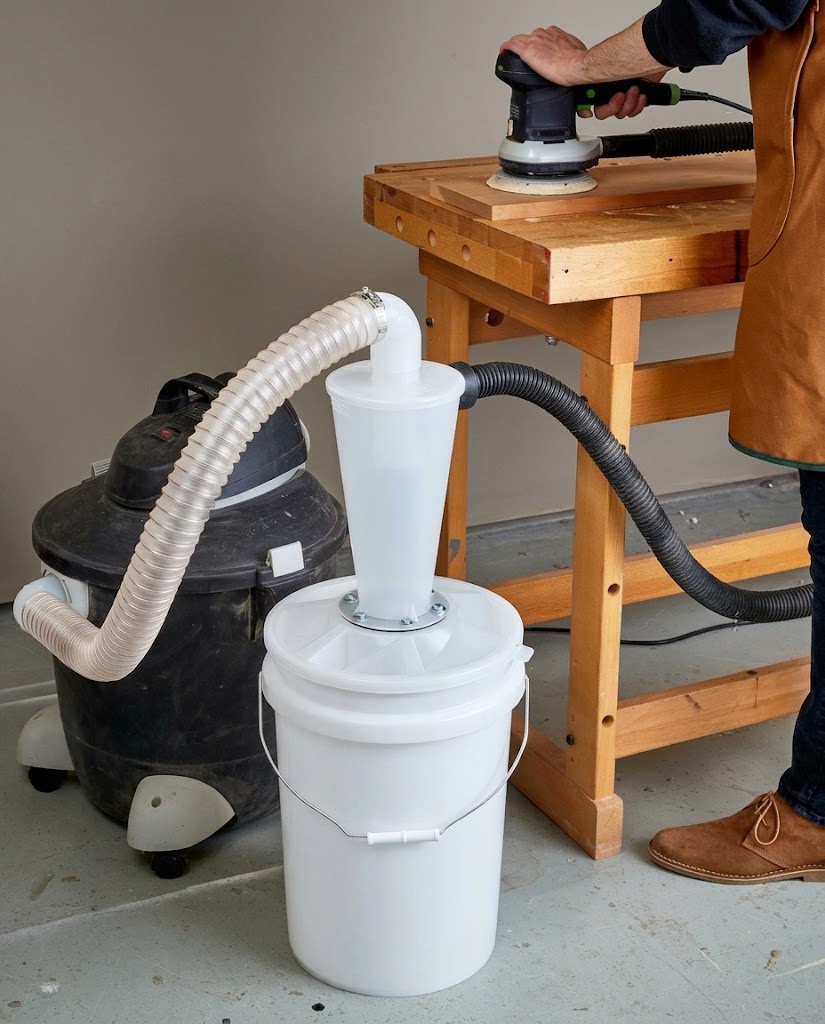
The best dust separators for small workshops can make a noticeable difference in keeping your woodworking space cleaner and easier to maintain. By collecting much of the sawdust, wood chips, and other debris before it reaches your shop vacuum, a separator can help reduce filter buildup, extend the time between cleanings, and make workshop cleanup less frustrating.
But choosing the right one isn’t as simple as buying the highest-rated cyclone or the most expensive model. Some separators are compact lids designed for five-gallon buckets, while others are complete mobile collection units. Larger cyclone separators are intended for dust collectors and stationary woodworking machines rather than ordinary shop vacuums. Understanding these differences will help you compare the options and choose a separator that fits your workshop space, tools, and budget.
The best option depends on your existing vacuum, the tools you use, the amount of debris you produce, and how much room you have available.
In this guide, we’ll compare seven dust separator options, explain their main advantages and limitations, and help you decide which design makes the most sense for your workshop.
Quick recommendation: If you’re building a DIY shop-vac setup, start by comparing the Oneida Dust Deputy 2.5 DIY XL, Dustopper PRO, and POWERTEC separator. If you prefer a more complete mobile unit, look at the Mullet High-Speed Cyclone Dust Collector and Rockler Dust Right Separator. If your workshop has a larger dust collector, the Oneida Super Dust Deputy XL is a different type of upgrade worth considering.
Quick Comparison: Best Dust Separators For Small Workshops
The products below cover different workshop needs. They are not all direct competitors: the first five are primarily relevant to shop-vac or compact collection setups, while the Super Dust Deputy XL is intended for a larger dust-collection system.
| Product | Best suited for | Main advantage | Main consideration |
|---|---|---|---|
| Oneida Dust Deputy 2.5 DIY XL | DIY woodworking setups | Flexible cyclone-based design | Requires a compatible container and connections |
| Dustopper PRO | Small shops with limited space | Low-profile bucket-lid format | Bucket and hose compatibility matter |
| Mullet High-Speed Cyclone Dust Collector | Buyers wanting a more complete mobile unit | Integrated collection bin and mobility | Higher initial cost and larger footprint |
| POWERTEC Low-Profile Separator | Budget-conscious DIY users | Compact separator format | Confirm the exact model and included parts |
| Rockler Dust Right Separator | Frequent workshop cleanup | Wheeled collection container | Requires more floor space |
| Oneida Super Dust Deputy XL | Larger dust-collection systems | Designed for a larger collector setup | Not a direct replacement for a shop-vac lid |
| Oneida Dust Deputy Low-Pro Plus | Compact DIY collection setups | Low-profile kit with additional fittings | Bucket is not included |
Prices, stock status, review counts, and product bundles can change. Check the exact listing before ordering, particularly when Amazon offers multiple variants or third-party sellers.
Below Are the 7 Best Dust Separators for Small Workshops
Before comparing the best dust separators for small workshops, consider how each option fits your tools, workspace, and budget. Some models are designed for quick upgrades to a shop vacuum, while others offer greater capacity or a more complete dust collection setup. Below, we review seven options to help you understand their features, advantages, limitations, and ideal uses before making a decision.
1. Oneida Dust Deputy 2.5 DIY XL
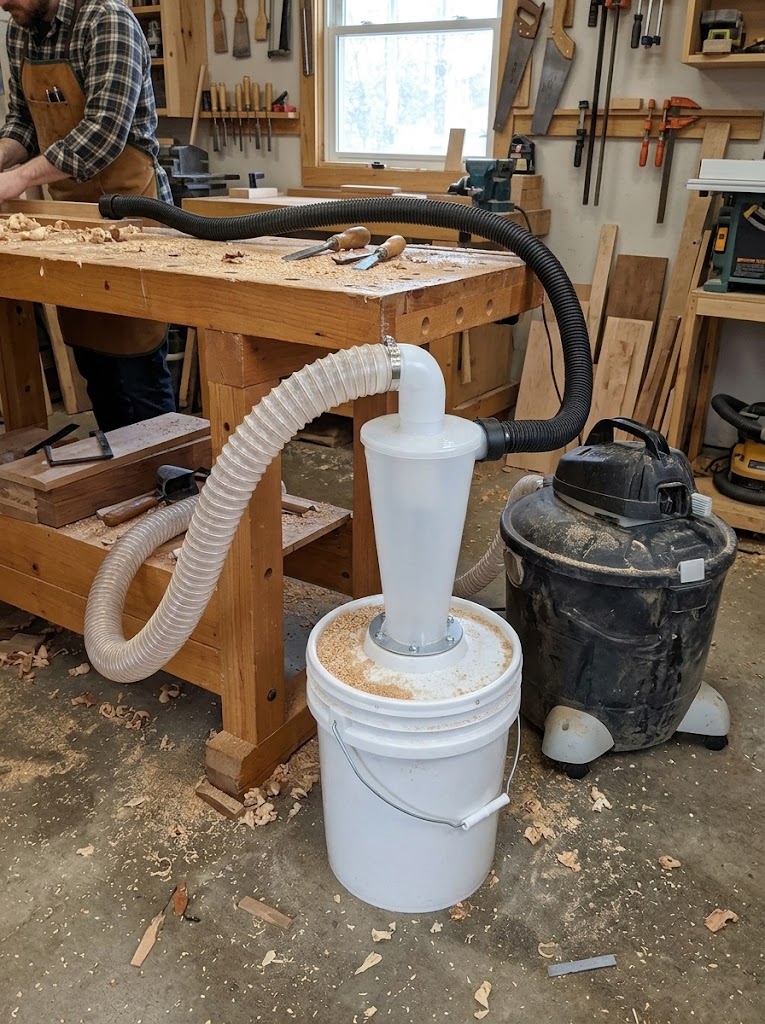
Best for: Woodworkers who want to build a flexible cyclone separator setup around an existing shop vacuum.
The Oneida Dust Deputy 2.5 DIY XL is a cyclone separator intended to sit between your dust-producing tool and your vacuum. Instead of allowing all the debris to travel directly into the vacuum, the cyclone creates a spinning airflow that helps separate heavier particles and direct them into a collection container.
This design is useful for hobbyists who already own a wet/dry shop vacuum and want to reduce the amount of sawdust and chips reaching its filter.
Unlike a complete mobile separator unit, the DIY approach gives you more flexibility over the container, mounting arrangement, and hose routing. That flexibility can be an advantage if you’re building a custom dust collection cart or adapting the setup to a small garage workshop.
View product on Amazon: Oneida Dust Deputy 2.5 DIY XL
What makes it worth considering?
The main attraction is the ability to integrate a cyclone into an existing vacuum setup without buying an entirely new dust collection system.
For example, you could mount the separator above a suitable collection container, connect the tool hose to the cyclone inlet, and connect the outlet to your shop vacuum. The exact arrangement depends on the product’s instructions and the fittings required by your equipment.
The cyclone is particularly useful when you’re frequently collecting larger quantities of sawdust and wood chips. By intercepting much of this debris before it reaches the vacuum, it can help reduce how often you need to open the vacuum and clean its filter.
The DIY format can also appeal to woodworkers who enjoy making their own workshop carts and storage systems.
Potential pros
- Offers flexibility for custom installations.
- Can be integrated with a compatible wet/dry shop vacuum.
- Helps reduce the amount of collected debris reaching the vacuum filter.
- Suitable for DIY workshop organization and dust collection projects.
- Lets you choose a container and mounting arrangement appropriate for your available space.
Potential cons
- It is not a complete, ready-to-roll collection system.
- You may need to purchase a container, hoses, adapters, clamps, or mounting hardware separately.
- Poorly sealed connections can reduce performance.
- The completed setup can occupy more space than the cyclone itself suggests.
- It does not eliminate the need for suitable vacuum filtration.
Who should buy it?
Consider the Dust Deputy 2.5 DIY XL if you already own a shop vacuum and want to build a custom separator setup. It’s also worth considering if you enjoy DIY projects and want more control over the arrangement of your collection equipment.
Before buying, check the exact package contents and the dimensions of the inlet and outlet. Confirm that your container can withstand the vacuum’s negative pressure. A weak or poorly supported container can collapse when exposed to strong suction.
Who should skip it?
If you want a complete unit with an integrated container and wheels, a mobile separator may be more convenient. If you operate a larger stationary machine that needs substantial airflow, you should also investigate whether your shop vacuum is appropriate for that tool.
Verdict: A strong candidate for a DIY shop-vac separator, especially for woodworkers who value flexibility over a ready-made setup.
2. Dustopper PRO
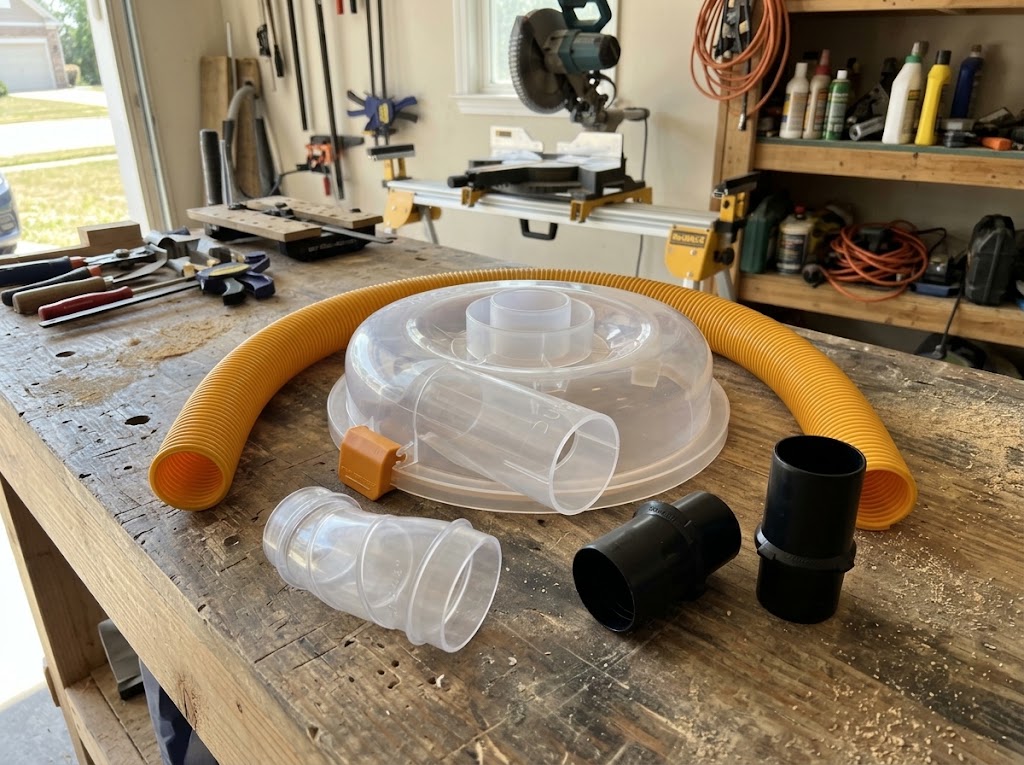
Best for: Small workshops that need a compact, bucket-based dust separator.
The Dustopper PRO uses a low-profile design that fits over a suitable five-gallon bucket. Its compact form makes it appealing to people who work in a garage, basement, or small woodworking area where every inch of floor space matters.
Rather than buying a large collection unit, you can use a compatible bucket as the debris container and connect the separator between your tool and shop vacuum.
This style of separator can be particularly convenient for sanding, drilling, routing, and general woodworking cleanup, provided the vacuum and tool connections are suitable for the job.
View product on Amazon: Dustopper PRO
Why consider the Dustopper PRO?
Its biggest selling point is the compact design. A low-profile separator can be easier to store, move, and fit into a small workspace than a taller cyclone assembly.
The bucket-based approach also makes it relatively straightforward to empty the collected debris. You can remove the separator assembly as directed, empty the container, and return it to service.
However, the bucket and lid need to form a secure connection. A poorly fitting lid or a container that deforms under suction can interfere with operation.
The manufacturer describes the PRO model as a high-efficiency separator. Any numerical efficiency claims should be checked against the manufacturer’s current documentation and understood in the context of the test conditions. Real-world results depend on the material collected, airflow, connections, and overall system design.
Potential pros
- Low-profile format for space-constrained workshops.
- Uses a bucket-based collection arrangement.
- Can be a practical alternative to a large mobile separator.
- Suitable for DIY users who want a relatively compact installation.
- Can reduce the amount of larger debris reaching the vacuum filter.
Potential cons
- A suitable bucket may need to be purchased separately.
- Hose dimensions and fittings must match your vacuum and tools.
- The small container may need frequent emptying during heavy work.
- A poorly sealed bucket or connection can compromise performance.
- Fine airborne dust may still pass through the separator.
What to check before buying
Start with the diameter and shape of the bucket rim. A separator designed around a particular bucket format may not seal properly on a different container.
Next, check your shop vacuum’s hose dimensions. Even when two products are advertised for shop-vac use, their included fittings may not match your particular vacuum.
Finally, consider where you’ll place the bucket. A lightweight bucket can be convenient to move, but a separator that is easy to tip over may be frustrating during regular use.
Who should buy it?
The Dustopper PRO is worth considering if your main priority is a compact, bucket-based setup for a small shop vacuum.
It may be particularly attractive if you don’t want to build a tall cyclone cart or dedicate a large area to a collection system.
Who should skip it?
If you regularly produce large volumes of wood chips or want a more substantial mobile collection unit, compare it with the Mullet or Rockler systems. If your tools require airflow beyond what your vacuum and separator arrangement can provide, changing the separator alone won’t solve the problem.
Verdict: A useful compact option for a small workshop, provided the bucket, hose connections, and vacuum are compatible.
3. Mullet High-Speed Cyclone Dust Collector
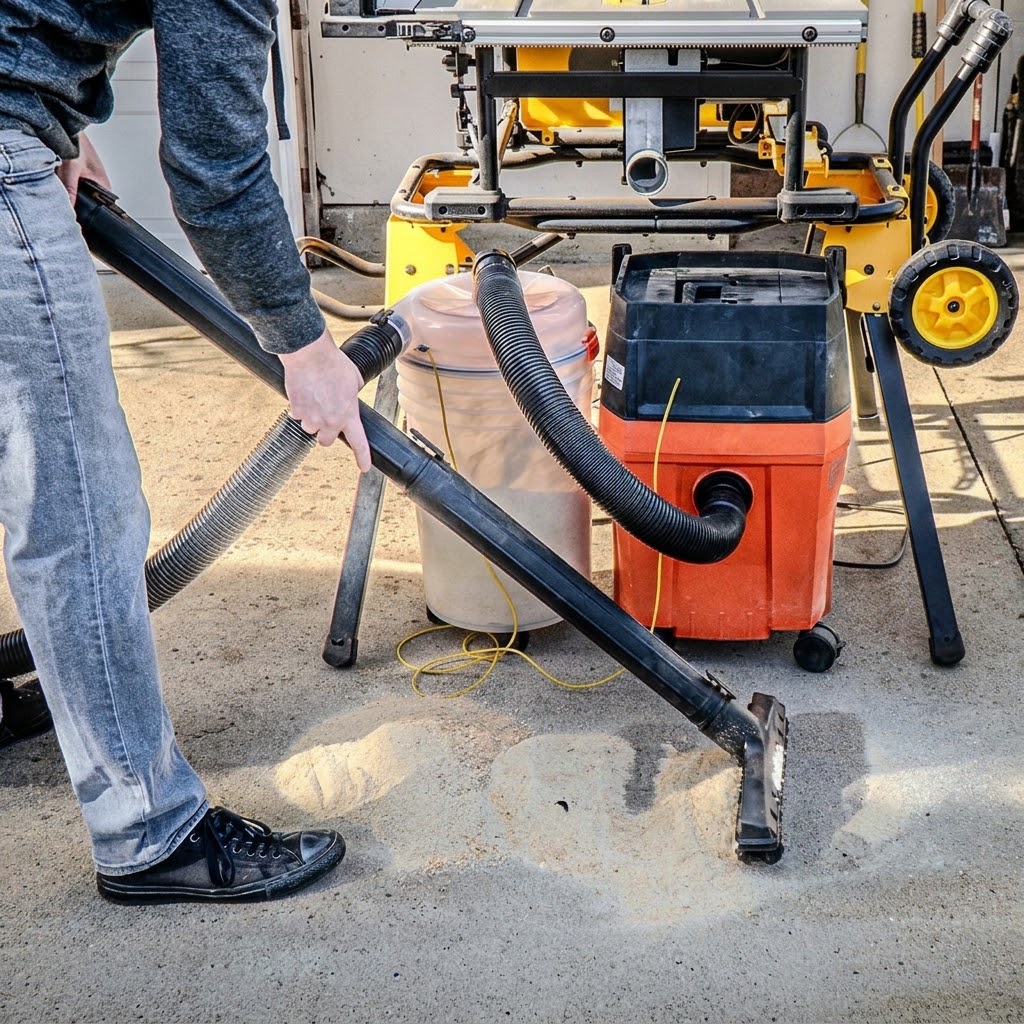
Best for: Buyers who want a more complete, mobile cyclone collection unit rather than a simple separator lid.
The Mullet High-Speed Cyclone Dust Collector takes a different approach from bucket-lid separators. It combines a cyclone with a collection bin and a mobile arrangement, making it appealing to woodworkers who want to move their dust collection equipment around the shop.
The manufacturer lists vacuum hose adapters with the product, but you should check the current package details and compatibility information before ordering.
View product on Amazon: Mullet High-Speed Cyclone Dust Collector
Why choose a more complete unit?
A DIY separator can be inexpensive and flexible, but it requires more decisions. You need a suitable container, a stable mounting arrangement, compatible fittings, and a way to move or store the finished setup.
A more complete cyclone unit can simplify some of those decisions.
For a workshop where the vacuum and separator move between a sander, router, workbench, and cleanup tasks, mobility can be valuable. Casters or an integrated base can make it easier to reposition the collection unit without repeatedly lifting a bucket or dismantling the hoses.
The Mullet is also worth considering for people who prefer an integrated design rather than assembling a collection cart from separate components.
Potential pros
- Integrated collection bin and cyclone arrangement.
- Mobile design for workshops where equipment needs to move.
- A more complete approach than buying a separator lid alone.
- Manufacturer-supplied adapters may simplify connections for compatible vacuums.
- Potentially convenient for frequent workshop cleanup.
Potential cons
- Typically requires a larger initial investment than a basic separator lid.
- Takes up more space than a compact bucket-based design.
- Compatibility still depends on the vacuum, hoses, and tool ports.
- A mobile unit does not automatically provide the airflow required by every woodworking machine.
- Buyers should check the current warranty and included accessories rather than relying on older descriptions.
Is it worth the extra cost?
The answer depends on how often you use your dust collection setup.
If you work in your shop only occasionally and collect small amounts of debris, a simple separator lid may provide sufficient convenience.
If you use several tools throughout the week and regularly move your equipment, an integrated mobile unit may be worth the additional cost. You are paying for more than the cyclone alone: the container, base, fittings, and overall arrangement can save assembly time and make everyday use easier.
Compare the complete cost of each setup. A low-priced separator lid may require additional hoses, adapters, a suitable bucket, and mounting hardware. A more complete unit may be closer in total cost than the initial product prices suggest.
Who should buy it?
Consider the Mullet if you want a mobile separator with an integrated collection arrangement and prefer a more complete product over a DIY build.
It is also a useful comparison for buyers deciding whether the convenience of an integrated system justifies spending more.
Who should skip it?
If you have very little storage space or simply want an inexpensive separator for occasional cleanup, a bucket-lid design may be more appropriate.
Verdict: A promising option for woodworkers who prioritize an integrated, mobile setup. Compare its current price and included parts against the total cost of a DIY alternative.
4. POWERTEC Low-Profile Cyclone Dust Separator
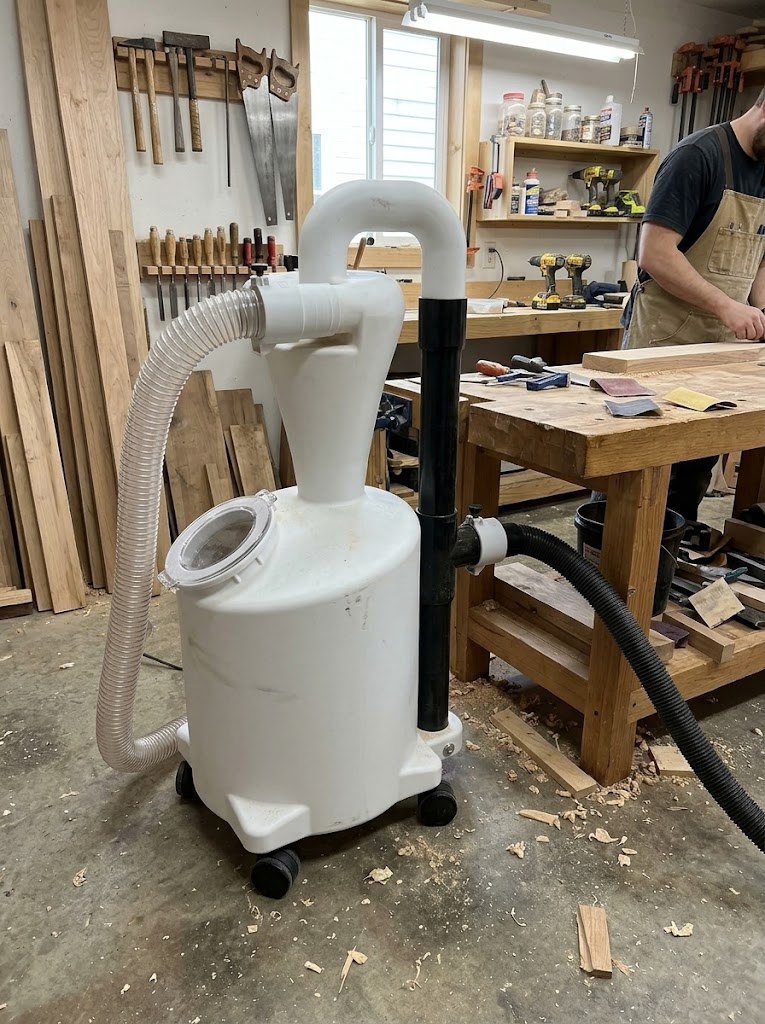
Best for: DIY users comparing compact separators with different hose-size options.
POWERTEC sells cyclone dust separation products for workshop dust collection. Its low-profile separator design is intended to sit on a suitable collection container and separate debris before it reaches the vacuum or collection system.
The exact model and package associated with the Amazon link below should be confirmed before publication. POWERTEC has multiple separator products, and similar-looking models can have different fittings or included accessories.
View product on Amazon: POWERTEC Low-Profile Cyclone Dust Separator
What makes it worth comparing?
A low-profile separator can be useful if you want a compact arrangement without building a large cyclone cart. Depending on the exact model, hose-size options and included fittings may help it work with different workshop setups.
POWERTEC’s published information for its 72295 low-profile separator describes compatibility with several hose sizes and advertises high separation efficiency. Those specifications apply to that named model; do not assume they apply to your Amazon listing until its model number and package are confirmed.
Potential pros
- Compact separator format.
- Potentially suitable for a range of workshop hose configurations, depending on the exact model.
- Can be integrated into a DIY collection container.
- Offers another option to compare against Dustopper and Oneida products.
Potential cons
- The exact Amazon model and package need verification.
- The collection container may not be included.
- Additional fittings or adapters may be required.
- Manufacturer efficiency figures are not independent test results unless supported by independent testing.
- Compatibility depends on the complete setup.
What should you check before ordering?
First, confirm the model number shown on the Amazon product page. Then compare that number with the manufacturer’s official specification sheet.
Check whether the listing includes the separator only or a kit containing hoses, elbows, clamps, or other accessories. Also confirm the recommended container and the dimensions of the connections.
These details matter because two products can look similar in photographs while offering different installation options.
Who should buy it?
POWERTEC is worth considering if you want a compact cyclone and are comfortable checking the details of a DIY installation.
It may also be a good alternative if its verified package includes the specific fittings your current setup needs.
Who should skip it?
If you want a ready-to-use mobile unit, a complete separator may be easier. If the exact model or included parts cannot be confirmed, choose a product with clearer specifications before making a purchase.
Verdict: Keep this product in the comparison, but confirm the exact Amazon model before publishing a definitive recommendation.
5. Rockler Dust Right Dust Separator, 2.5-Inch
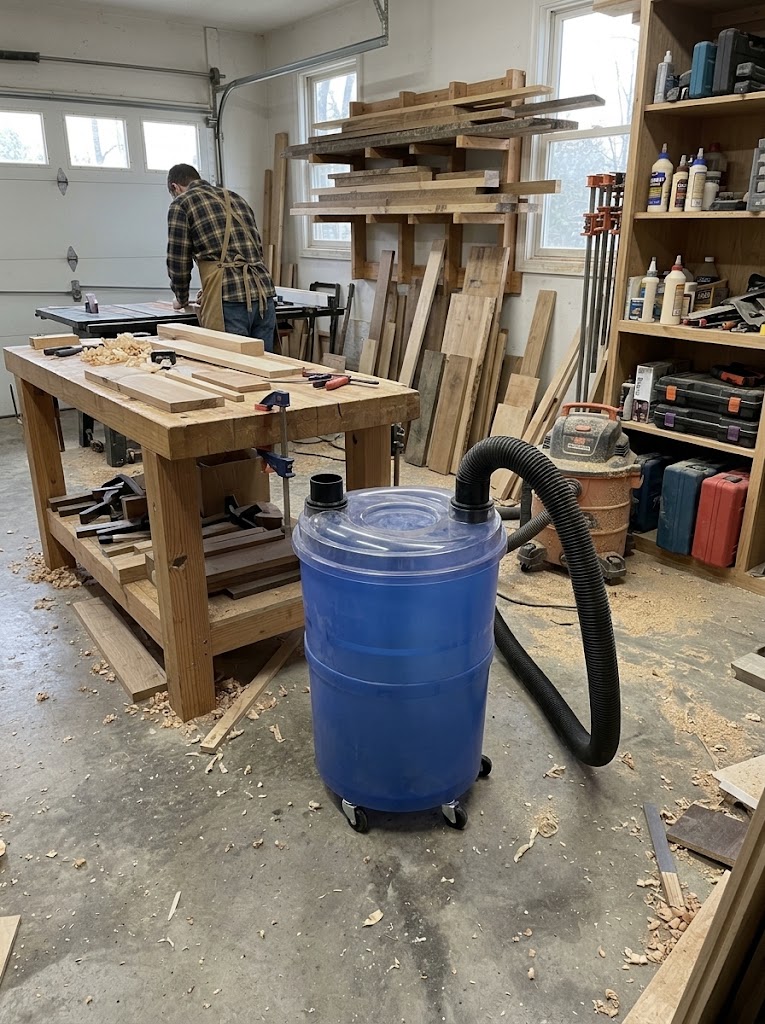
Best for: Woodworkers who want a wheeled collection container for regular workshop cleanup.
The Rockler Dust Right Dust Separator is designed around a collection container and mobile base. Compared with a basic bucket lid, this style of separator is more substantial and may be more convenient for people who move their equipment around the shop frequently.
The product is particularly relevant to buyers who want to collect debris without building a complete separator cart from separate parts.
View product on Amazon: Rockler Dust Right Dust Separator
Why consider the Rockler Dust Right?
One of the main advantages of a wheeled separator is convenience. If your collection setup needs to move between a workbench, sanding station, and other areas, a mobile base can make the equipment easier to reposition.
The collection container also gives you a different capacity and handling experience from a small bucket-based separator. A larger container may mean fewer interruptions to empty it, although the actual interval depends on how much debris your tools produce.
Rockler’s product information describes a translucent collection container and wheeled base. Check the current listing for the exact included hose and connection details.
Potential pros
- Wheeled design makes the unit easier to move.
- Larger collection container than many compact bucket-lid arrangements.
- Can be convenient for frequent cleanup and multiple work areas.
- An established woodworking retailer provides product information and support.
- Offers a more integrated alternative to a DIY separator cart.
Potential cons
- Takes up more floor space than a low-profile separator.
- Costs more than many basic separator lids.
- The included connections may not match every vacuum or tool.
- The container still needs to be emptied and maintained.
- A separator does not replace appropriate filtration for fine airborne dust.
Is a wheeled separator better than a bucket separator?
Not necessarily. It depends on how you work.
A bucket-based separator is usually attractive when space and purchase cost are the main concerns. It can be stored under a bench or moved when needed.
A wheeled unit is more appealing when you regularly move your collection equipment around a larger workshop. It can also be more convenient if you collect enough debris that a small bucket becomes inconvenient.
Think about where the separator will live when you’re not using it. A large wheeled unit can be convenient during work but frustrating in a crowded garage if it blocks storage or walkways.
Who should buy it?
Consider the Rockler Dust Right if you want a more substantial mobile collection setup and have enough room for it.
It may be especially suitable for hobbyists who use their shop vacuum frequently and want the separator, container, and base in one coordinated arrangement.
Who should skip it?
If you have very limited floor space or only collect small amounts of dust, a compact separator may be easier to live with.
Verdict: A practical mobile option to compare against the Mullet and bucket-based designs. Decide based on the current price, container capacity, mobility, and included parts.
6. Oneida Super Dust Deputy XL
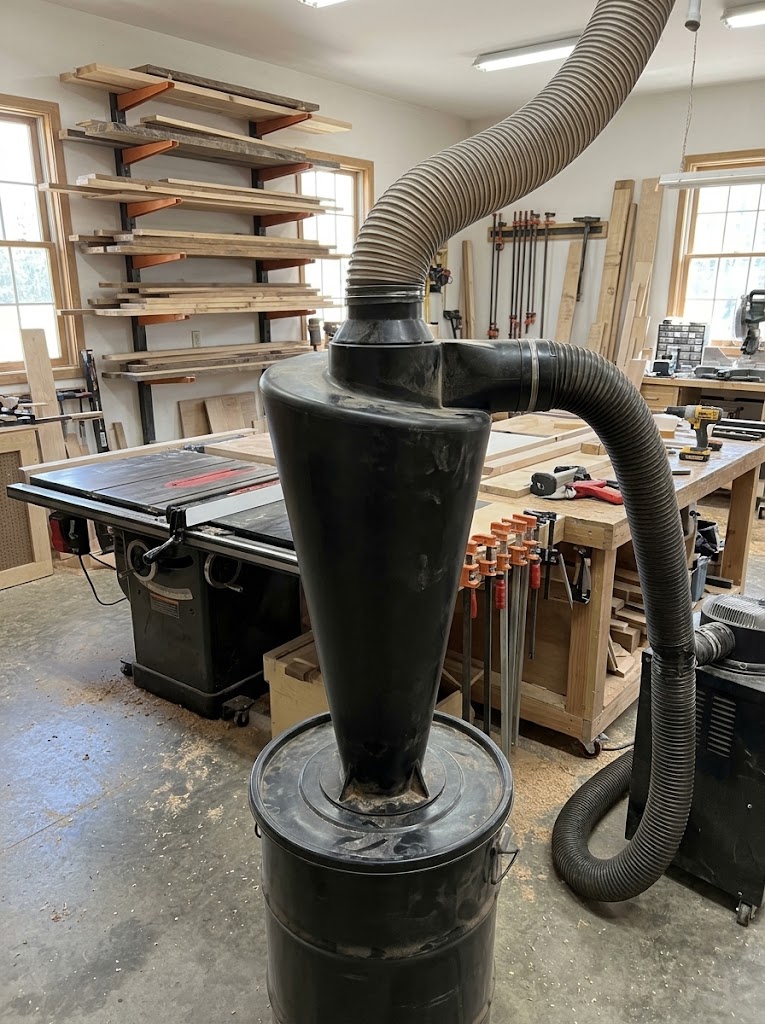
Best for: Workshops with a compatible larger dust collector that need a cyclone upgrade.
The Oneida Super Dust Deputy XL belongs in a different category from the compact separators in this guide. It is intended for larger dust-collection systems, not as a simple lid that can be placed on a five-gallon bucket and connected to any shop vacuum.
That distinction is important. A separator designed for a larger collector must be evaluated in the context of the collector’s airflow, inlet size, mounting arrangement, and intended application.
View product on Amazon: Oneida Super Dust Deputy XL
Why consider a larger cyclone?
A small shop vacuum is convenient for portable tools and cleanup, but it may not provide the airflow needed for certain stationary woodworking machines.
If your workshop has grown to include equipment such as a planer, jointer, or a ducted table-saw collection system, you may be considering a dedicated dust collector.
In that situation, a larger cyclone separator may be worth investigating. It can form part of a more substantial collection system designed around the airflow requirements of the machines being used.
However, installing a larger cyclone does not automatically improve an undersized system. The collector, ductwork, hoses, filters, and cyclone must be compatible with one another.
Potential pros
- Designed for a larger dust-collection application.
- Relevant to woodworkers upgrading from a shop-vac setup.
- Provides an option for readers whose collection needs have outgrown a compact separator.
- Makes it possible to discuss cyclone upgrades without confusing them with bucket-lid products.
Potential cons
- Not a direct substitute for a small shop-vac separator.
- Requires compatible collector specifications and installation.
- May be excessive for a hobbyist who only needs occasional cleanup.
- Could require additional mounting or ductwork components.
- The complete system cost may be substantially greater than the cyclone’s purchase price alone.
What should you check?
Before buying, confirm the exact inlet and outlet dimensions, the collector requirements, mounting needs, and any manufacturer recommendations about airflow.
Consider the machines you intend to connect. A separator cannot compensate for a collector that is unable to deliver adequate airflow through the ductwork and tool ports.
Also consider the amount of space available for the entire system. A larger cyclone may require a more permanent installation than a compact mobile separator.
Who should buy it?
The Super Dust Deputy XL is worth investigating if you already own a compatible larger dust collector or are planning a substantial workshop upgrade.
Who should skip it?
If your setup consists of a portable shop vacuum and a five-gallon bucket, this is probably not the right starting point. Compare the compact products earlier in this guide first.
Verdict: A specialist upgrade option, not an everyday substitute for the compact dust separators intended for small shop vacuums.
7. Oneida Dust Deputy Low-Pro Plus
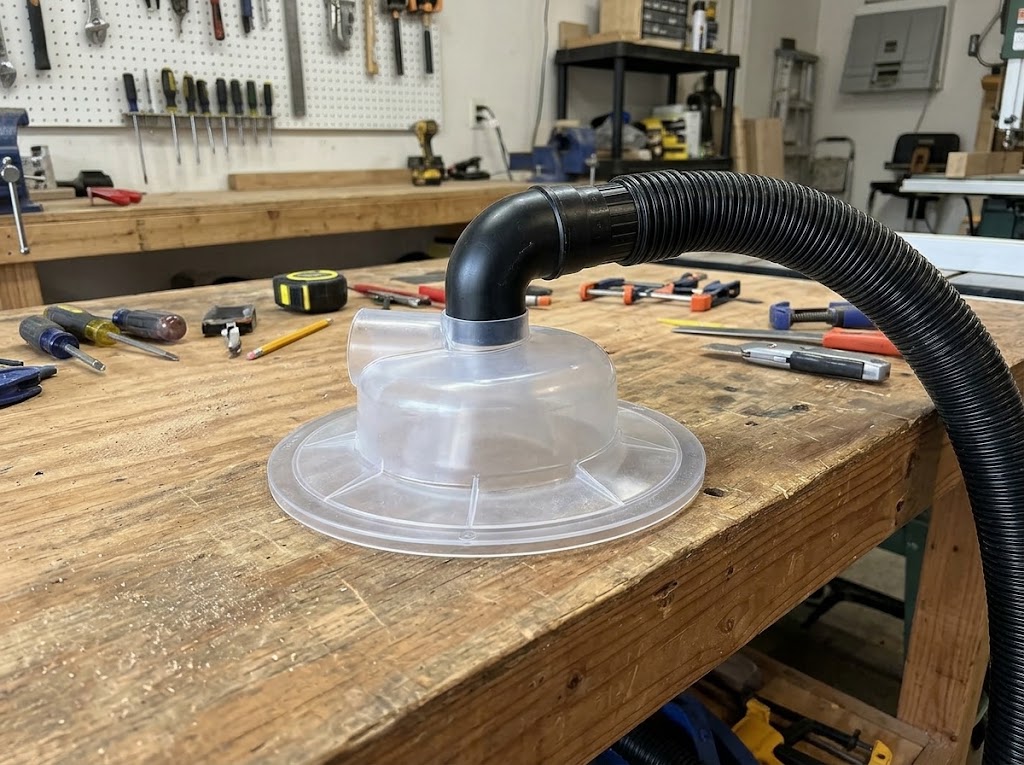
Best for: Buyers who want a compact separator kit with additional connection hardware.
The Oneida Dust Deputy Low-Pro Plus is another option for a shop-vac-based dust collection setup. Its low-profile design is intended for a compact installation, while the Plus kit includes additional components to help assemble the system.
This product is different from the Oneida Dust Deputy 2.5 DIY XL discussed earlier. The XL is a different cyclone format, while the Low-Pro Plus is intended for a lower-profile bucket-based arrangement.
View product on Amazon: Oneida Dust Deputy Low-Pro Plus
Why consider the Low-Pro Plus?
A separator kit can simplify installation when it includes the accessories you actually need. Instead of purchasing the cyclone and then sourcing every adapter and fitting individually, you can start with a package intended to work as a system.
Oneida’s product information lists components such as a hose, elbow adapter, bucket latches, and gasket for the Low-Pro Plus kit. The bucket is not included, so confirm the current package details before ordering.
The low-profile form can also help when you need to fit the separator beneath a workbench or within a compact collection cart.
Potential pros
- Compact bucket-based design.
- Kit includes additional fittings and hardware compared with a cyclone-only purchase.
- Can be suitable for DIY shop-vac installations.
- May reduce the need to source compatible components separately.
- Provides an alternative to other low-profile separator lids.
Potential cons
- The bucket is not included.
- Buyers still need to verify compatibility with their vacuum and tool connections.
- The complete kit may cost more than a basic separator lid.
- Installation quality still matters; included parts cannot correct a poorly sealed or unsuitable container.
- It is not intended to replace a larger collector where higher airflow is needed.
Is the Plus kit worth it?
Compare the complete package rather than looking only at the headline price.
If the included hose, elbow, gasket, and latches match your intended installation, the kit may save time and simplify setup. If you already have compatible accessories, a simpler separator could be more economical.
Also check the bucket requirements and the space available for the assembled system.
Who should buy it?
Consider the Low-Pro Plus if you want a compact Oneida separator and value the convenience of a kit with additional connection hardware.
Who should skip it?
If you already have a complete collection cart or need a larger separator for a dedicated dust collector, another product may suit your requirements better.
Verdict: A useful compact-kit option, particularly for buyers who want to simplify the installation process.
How We Evaluated These Dust Separators
The products in this guide were selected to represent different separator designs and workshop requirements. They were not all tested side by side, so this is a research-based buying guide rather than a laboratory test or hands-on product shootout.
The most important evaluation criteria are practical ones that affect how a separator performs in everyday use.
1. Compatibility
The separator needs to work with the vacuum, hoses, and tools you already own—or the complete system you intend to build.
A product may have the right advertised hose diameter but still need a reducer, elbow, or adapter. Check the exact connection dimensions before buying.
2. Collection container and sealing
The container must hold the debris and remain properly sealed during operation. Its strength also matters because a vacuum can create negative pressure that may deform an unsuitable container.
For bucket-based products, check the recommended bucket style, lid fit, and gasket arrangement.
3. Convenience and mobility
Some users want a simple lid they can store on a shelf. Others want a complete unit that rolls around the workshop.
The more frequently you move the collection equipment, the more valuable a mobile base may become.
4. Maintenance
A separator should reduce the amount of debris reaching the vacuum, but it still needs to be emptied and checked. Consider how easily you can access the collection container and inspect the connections.
5. Value
The initial price is only part of the total cost. A low-cost separator may require additional fittings, a bucket, hoses, and mounting hardware. A complete unit may cost more initially but require fewer additional purchases.
6. Available product evidence
Manufacturer specifications help establish dimensions, included parts, and intended use. Independent tests can provide more useful evidence about performance, while customer reviews may reveal recurring setup or durability problems.
No single rating tells the whole story. Review counts, seller ratings, product variants, and review dates should be checked on the exact listing before purchase.
What Is a Dust Separator, and How Does It Work?
A dust separator is installed between a dust-producing tool and a vacuum or dust collection system. Many workshop models use a cyclone-shaped chamber to create a spinning airflow.
As air and debris enter the chamber, the airflow causes heavier particles to move toward the outer wall. Those particles lose momentum and fall into the collection container, while the remaining air continues toward the vacuum.
The process can separate a substantial amount of larger debris, but performance depends on the separator design, airflow, material being collected, and overall installation.
A separator is particularly useful when collecting sawdust, wood chips, and other debris that would otherwise accumulate in the vacuum’s collection tank and load its filter.
However, not every particle is captured. Fine dust can remain airborne and pass through the separator. That’s why a cyclone separator should be treated as one component of a dust-control system rather than a complete solution to airborne dust.
Dust Separator vs. Shop Vac: Do You Need Both?
A shop vacuum creates the airflow needed to draw debris through a hose. A dust separator helps remove much of that debris before it reaches the vacuum.
They perform different jobs.
A shop vac alone may be adequate for occasional cleanup or light DIY work. Adding a separator can be worthwhile when you’re frequently collecting sawdust or chips and want to reduce filter loading.
For example, if you regularly sand wood, use a router, or clean up after cutting, a separator can intercept a portion of the debris before it reaches the vacuum. You will still need to empty the separator and maintain the vacuum filter.
A separator also does not automatically transform a shop vacuum into a high-airflow dust collector. Some stationary machines require more airflow than a typical shop vacuum can provide.
The practical rule: Choose the separator for the type of vacuum and collection system you have, not just for the tools you hope to connect.
How to Choose the Best Dust Separator for Your Workshop
Before ordering, answer these questions.
1. What kind of tools do you use?
For sanding, routing, drilling, and general cleanup, a compact separator connected to a compatible shop vacuum may be sufficient.
For tools that produce large volumes of chips, or machines designed for high-airflow dust collection, you need to assess the airflow requirements separately. A separator can reduce debris reaching the collector, but it cannot compensate for inadequate airflow.
2. Do you want a DIY system or a complete unit?
A DIY cyclone can give you flexibility over mounting and container choice. It may also be economical if you already have the necessary parts.
A more complete mobile unit may be easier to set up and move, but it usually costs more and takes up additional space.
3. What size container do you need?
A small bucket can be convenient for light work. If you collect large amounts of sawdust or wood chips, a larger container can reduce how often you need to stop and empty it.
Remember that nominal container capacity is not the same as usable capacity. Avoid allowing debris to reach the cyclone outlet, and follow the manufacturer’s instructions for emptying and maintenance.
4. Will the separator fit your vacuum?
Check the vacuum hose diameter, separator inlet and outlet sizes, tool port dimensions, and any adapters required.
Don’t rely solely on a product title that says “fits shop vacs.” Verify the specific connections.
5. Where will you keep it?
If your shop doubles as a garage or storage area, a low-profile bucket setup may be easier to accommodate than a wheeled unit.
If you have multiple workstations and move the collection equipment regularly, a mobile separator may be worth the additional space.
6. What about filtration?
A separator helps reduce debris reaching the vacuum, but it does not eliminate fine airborne dust. Use a suitable vacuum filter, maintain the system, capture dust at the tool where possible, and follow appropriate ventilation and respiratory-protection practices.
Wood dust can present health risks. A separator should never be treated as a replacement for proper dust control.
Which Dust Separator Is Best for Different Workshop Setups?
| Workshop situation | Product type to consider | Why |
|---|---|---|
| Occasional DIY cleanup | Compact bucket-based separator | Simple storage and relatively low complexity |
| Frequent sanding and routing | Shop-vac cyclone separator | Can reduce debris reaching the vacuum filter |
| Custom collection cart | DIY cyclone such as the Dust Deputy | Allows flexible mounting and container selection |
| Small shop with limited floor space | Low-profile separator such as Dustopper PRO or Low-Pro Plus | Compact arrangement |
| Frequent movement around a workshop | Mobile unit such as the Mullet or Rockler | Easier to reposition |
| Larger stationary woodworking machines | Compatible dust collector and cyclone | Better suited to systems designed around higher airflow |
These are starting points, not universal guarantees. The right configuration depends on the tool’s requirements and the performance of the complete collection system.
Oneida Dust Deputy vs. Dustopper PRO
These products are useful to compare because both target compact shop-vac setups.
The Oneida Dust Deputy 2.5 DIY XL is attractive to users who want a flexible cyclone for a custom installation. The Dustopper PRO is a low-profile, bucket-based option for people who want to keep their collection setup compact.
The decision comes down to the exact package and your installation.
Choose the Oneida DIY XL if its design suits the container and mounting arrangement you want to build. Consider the Dustopper PRO if its low-profile design and bucket arrangement better fit your available space.
Before comparing prices, add the cost of any required container, hoses, adapters, and mounting hardware. The least expensive product listing may not result in the least expensive complete system.
Dustopper PRO vs. POWERTEC
Both are relevant to readers considering compact separators, but exact model verification matters.
Compare the actual hose connections, package contents, container requirements, and dimensions. If one listing includes useful fittings and the other does not, that may affect the total cost and setup effort.
Do not choose based only on an advertised separation-efficiency percentage. Check whether the figure is a manufacturer claim, what conditions it refers to, and whether an independent test is available.
A best dust separators for small workshops that fits properly and is easy to empty may be a better practical choice than a product with an impressive headline specification but inconvenient connections.
Bucket Separator vs. Mobile Dust Separator
A bucket-based separator usually wins on compact storage and simplicity. A mobile unit may win on convenience if you frequently move equipment around the workshop.
A bucket setup can be a good fit for a hobbyist who works at one bench and stores the vacuum when finished. A wheeled separator can be more useful for a workshop with several work areas.
Think about your normal workflow. If you repeatedly drag hoses, lift a full bucket, or move equipment between tools, a more complete mobile arrangement may save time.
On the other hand, a large separator that takes up valuable floor space may be a poor choice for a small garage. The best design is the one that fits your workshop rather than the one that looks most impressive in a product photo.
Common Dust Separator Buying Mistakes
Buying without checking hose sizes
Two products can both be advertised for shop-vac use but have different connections. Confirm dimensions before ordering.
Assuming every bucket will work
The container needs to fit the separator securely and withstand the vacuum’s negative pressure. An unsuitable container can deform or collapse.
Expecting a separator to capture all fine dust
Cyclone separators are generally more effective at separating larger debris than the finest airborne particles. Appropriate filtration and source capture remain important.
Choosing the cheapest option without calculating the complete cost
A basic lid may require a bucket, adapters, hoses, and mounting hardware. Compare the total setup cost.
Connecting a shop vac to a machine that needs more airflow
A separator cannot compensate for an undersized vacuum or inadequate ductwork. Check the machine’s dust-collection requirements.
Ignoring maintenance
A full container, clogged filter, loose hose, or leaking connection can interfere with performance. Inspect and maintain the complete system.
Trusting a product rating without reading the reviews
Look for recurring complaints and confirm that the reviews refer to the exact model you intend to buy. Ratings can combine variants or change over time.
Frequently Asked Questions
Are dust separators worth it for a small workshop?
They can be worthwhile if you regularly collect sawdust and wood chips with a shop vacuum. A separator can intercept much of that debris before it reaches the vacuum, potentially reducing filter loading and maintenance. If you only vacuum small amounts of debris occasionally, the added equipment may not be necessary.
Does a dust separator improve shop-vac suction?
Not automatically. A separator introduces another component into the airflow path, so its design, hose routing, connections, and restrictions matter. A properly configured separator can help maintain performance over time by reducing filter loading, but it does not create additional suction or airflow.
Can I use a dust separator with any shop vac?
Not necessarily. Check the separator’s hose sizes, adapters, and vacuum compatibility. The complete setup must also suit the tool being used. A separator that fits physically may still be unsuitable for a machine that requires greater airflow.
Does a cyclone separator remove all fine dust?
No. Cyclone separators can remove much of the larger debris, but fine particles may remain in the airflow. Use suitable filtration and dust-control practices, and don’t rely on a separator alone to protect against airborne wood dust.
Do I need a special bucket for a dust separator?
Follow the manufacturer’s recommendations. The bucket or container must fit securely and withstand the negative pressure created by the vacuum. A thin or unsuitable container may deform or collapse.
Is a bucket-lid separator better than a wheeled unit?
Neither is universally better. A bucket-lid separator can save space and may cost less. A wheeled unit may be more convenient for frequent use and larger collection volumes. Choose according to your workflow, storage space, and total setup cost.
Should I buy a DIY cyclone or a complete separator kit?
A DIY cyclone is useful if you want to customize the installation and already have compatible parts. A complete kit may be easier if it includes the fittings and components you need. Compare the total cost and installation effort rather than the separator price alone.
Can a shop-vac separator handle a table saw or planer?
It depends on the machine and the collection system. Some smaller tools can work with a suitable shop vacuum, while larger stationary machines may require substantially more airflow. Check the machine manufacturer’s dust-collection recommendations before choosing a separator.
How often should I empty the collection container?
Empty it before debris reaches the separator outlet or exceeds the manufacturer’s recommended fill level. The appropriate interval depends on container size, the type of debris, and how much material your tools produce.
Does adding a separator mean I can clean my vacuum filter less often?
It may reduce how quickly the filter loads with larger debris, but you still need to inspect and maintain the filter according to the vacuum manufacturer’s instructions. Fine dust can continue to reach the filter.
Final Verdict: Which Dust Separator Should You Choose?
The best dust separator for a small workshop is the one that fits your existing equipment, collection needs, and available space.
For a DIY shop-vac setup, start by comparing the Oneida Dust Deputy 2.5 DIY XL, Dustopper PRO, and Oneida Dust Deputy Low-Pro Plus. Pay close attention to the exact package, hose connections, container requirements, and installation effort.
If you prefer a more complete mobile unit, compare the Mullet High-Speed Cyclone Dust Collector with the Rockler Dust Right Separator. Consider the total cost, collection container, mobility, and the amount of space each unit occupies.
The POWERTEC separator is also worth comparing once its exact model and included accessories are confirmed. If you’re upgrading a larger stationary collection system, the Oneida Super Dust Deputy XL belongs in a separate category from compact shop-vac separators.
Before purchasing, check the current Amazon listing, read recent reviews for the exact model, and verify the manufacturer’s specifications. Remember that a cyclone separator reduces the debris reaching your vacuum but does not replace appropriate filtration or dust-control practices.
Choose the system that suits your tools and workshop—not simply the one with the most impressive marketing claims.
Related Guides
- How Does a Cyclone Dust Separator Work? A Complete Guide
- How to Make a DIY Cyclone Dust Separator
- How to Choose the Right Dust Separator for Your Workshop
- Dust Separator vs. Shop Vac: What’s the Difference?
Affiliate disclosure: As an Amazon Associate I earn from qualifying purchases. This article may contain affiliate links, which means we may earn a commission if you purchase through qualifying links, at no additional cost to you.