
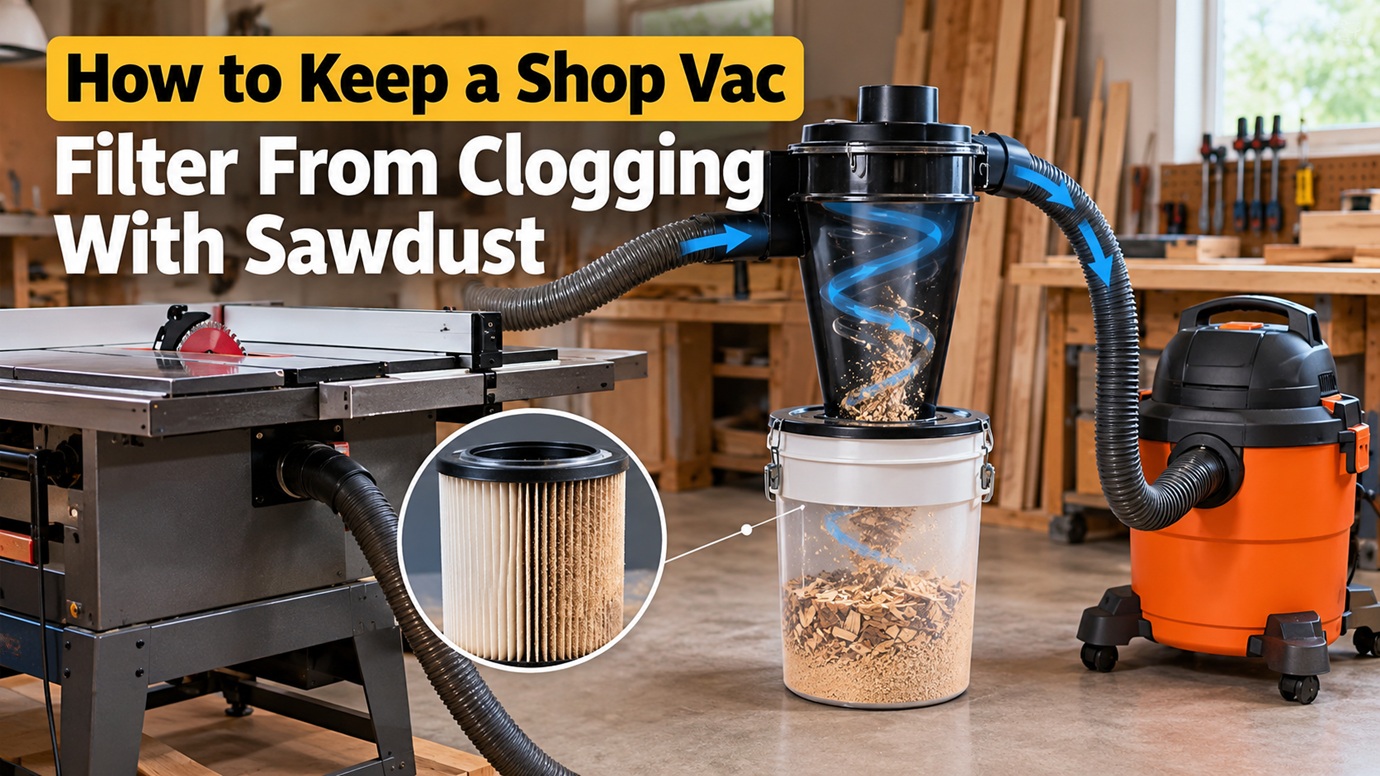
If you use a shop vacuum for woodworking, you may have noticed that suction starts strong but gradually weakens as you cut more wood. The problem is often a filter covered with fine sawdust. Learning how to keep a shop vac filter from clogging with sawdust can help maintain airflow, reduce cleaning interruptions, and make your workshop dust collection system more effective.
A standard shop vac can collect wood chips, sawdust, and debris from tools such as table saws, sanders, routers, and miter saws. However, fine wood dust can quickly load the filter, especially when the vacuum collects all the debris directly without a pre-separator or suitable collection bag.
The good news is that you do not necessarily need to replace your vacuum. Using a compatible filter bag, adding a cyclone dust separator, selecting the correct filter, and maintaining the system properly can make a noticeable difference.
In this guide, you will learn seven practical ways to keep your shop vac filter from clogging, how to identify the cause of lost suction, and which upgrades are worth considering for a small woodworking shop.
Why Does Sawdust Clog a Shop Vac Filter So Quickly?
A shop vac works by pulling air and debris through its hose and into the collection tank. The filter prevents dust from passing through the vacuum and escaping through its exhaust.
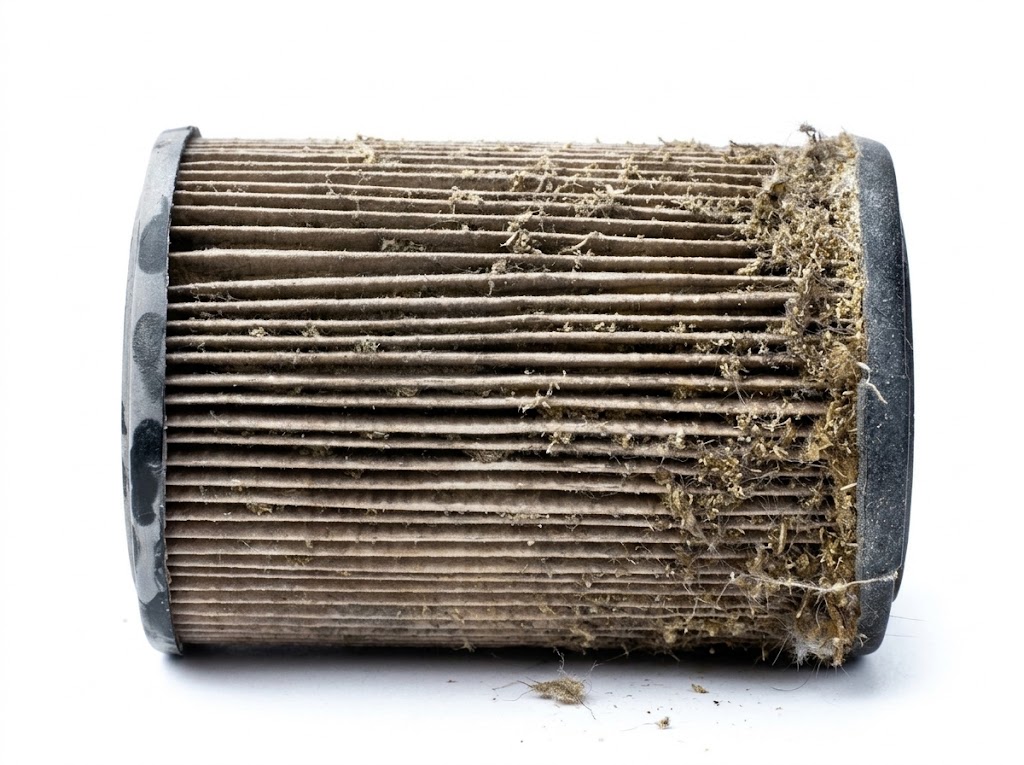
As air passes through the filter, fine particles accumulate on the filter surface or within its media. Over time, this buildup restricts airflow, reducing suction at the hose.
Woodworking creates a mixture of large chips, coarse sawdust, and very fine airborne particles. The finer material is particularly troublesome because it can accumulate rapidly on the filter.
Several factors can make the problem worse:
- Fine sawdust: Sanding dust and fine particles can load the filter faster than larger wood chips.
- No pre-separator: Without a separate collection stage, more debris reaches the vacuum filter.
- An unsuitable filter: A filter designed for larger debris may not be appropriate for fine woodworking dust.
- A full collection bag or tank: Restricted capacity can interfere with effective collection.
- Poor maintenance: A dirty filter, blocked hose, or damaged fitting can reduce airflow.
- Damp dust or a wet filter: Moisture can cause some filter media to clog and become difficult to clean.
Shop-Vac’s official filter and troubleshooting guidance identifies dirty filters and blocked hoses as common causes of lost suction. It also recommends selecting filtration appropriate to the material being collected.
Understanding the cause helps you choose the right fix instead of repeatedly cleaning the filter without solving the underlying problem.
1. Add a Cyclone Dust Separator Before the Shop Vac
One of the most effective ways to reduce filter clogging is to separate much of the sawdust before it reaches the vacuum.
A cyclone dust separator is installed between the woodworking tool and the shop vac. As the dusty air enters the separator, it spins inside the chamber. Much of the heavier debris loses momentum and falls into a collection bucket, while the remaining air and fine particles travel toward the vacuum.
This means the shop vac filter does not have to handle the entire load of wood chips and sawdust by itself.
Watch: How a Cyclone Dust Separator Works
See how spinning airflow separates sawdust and wood chips before they reach your shop vacuum. This short animation explains the cyclone separation process and shows how collected debris falls into a separate container.
How a cyclone separator helps
A compatible cyclone separator can:
- Collect much of the heavier sawdust and wood chips before they reach the vacuum.
- Reduce how quickly the cartridge filter becomes loaded.
- Help maintain airflow for longer between filter cleanings.
- Make it easier to empty collected debris from a separate container.
- Reduce the amount of debris accumulating inside the vacuum tank.
However, a cyclone separator does not capture every fine particle. Some dust will still reach the filter, so you should continue to use the appropriate filter and maintain it regularly.
Should you buy a cyclone separator or build one?
For a small woodworking shop, both options may be practical.
A commercial separator kit can be convenient because it often includes a shaped separator body, fittings, or a lid designed for a collection container. A DIY version may cost less if you already have a suitable bucket and compatible components.
Whichever option you choose, check the hose connections, seals, container strength, and compatibility with your vacuum. A leaking separator or collapsing container can undermine the setup.
If you are considering an upgrade, see our related guide on dust collection systems with a shop vac.

2. Use a Compatible Shop Vac Filter Bag
If you want a relatively simple way to reduce filter clogging, consider using a collection bag designed for your particular shop vac.
A compatible bag collects debris inside the tank before it reaches the cartridge filter. This can reduce the amount of sawdust that accumulates on the filter and make emptying the vacuum easier.
For fine woodworking dust, look for a bag specifically recommended by the vacuum manufacturer for that type of material.
Why filter bags can help
A suitable collection bag can:
- Catch much of the dust before it reaches the cartridge filter.
- Reduce the frequency of filter cleaning.
- Make it easier to dispose of collected sawdust.
- Keep the inside of the tank cleaner.
- Work as a useful first-stage collection method without adding a separate cyclone.
The result depends on the bag’s filtration performance, how well it fits, and the dust being collected.
How to choose the right bag
Before buying replacement bags, check your vacuum’s model number and manufacturer’s compatibility guide.
Do not assume that every shop vac bag fits every tank or that an ordinary low-filtration bag is sufficient for fine dust.
Inspect the bag for tears, overfilling, or poor installation. Replace it according to the manufacturer’s instructions.
Important: A collection bag does not necessarily replace the cartridge filter. Many shop vacs require both components during dry pickup. Follow the exact instructions for your vacuum.

3. Choose the Right Filter for Fine Woodworking Dust
Not all shop vac filters are designed for the same type of debris.
A filter suitable for collecting large wood chips may not provide the filtration needed for fine sanding dust. If you regularly work with MDF, plywood, hardwood, or power sanders, choosing an appropriate filter is especially important.
Cartridge filters and fine-dust filters
Many wet/dry vacuums use pleated cartridge filters. The pleats provide a relatively large filtration surface in a compact space.
Some models offer upgraded filters or high-efficiency filtration options intended for finer particles. Availability and compatibility vary, so check the manufacturer’s recommendations for your exact vacuum.
A finer filter does not automatically prevent clogging. Fine dust can still accumulate on the filter surface, and the actual performance depends on the filter design, its condition, and the rest of the collection system.
What about HEPA filters?
HEPA filtration concerns the ability to capture very small airborne particles. A HEPA-rated filter can be useful when the vacuum is designed and certified for the intended application, but the presence of a filter marketed as high-efficiency does not guarantee that the entire vacuum system provides HEPA-level filtration.
If you need HEPA performance, check the manufacturer’s specifications for the complete vacuum and filter arrangement.
Replace damaged filters promptly
Inspect the filter for tears, holes, damaged seals, and signs of wear. A damaged filter may allow dust to escape through the exhaust rather than remain inside the vacuum.
Never operate a dry-pickup shop vac without the required dry-use filter installed.
For guidance specific to your model, consult the manufacturer’s manual and Shop-Vac’s official filter FAQ.

4. Clean the Shop Vac Filter the Correct Way
Even with a cyclone separator and a compatible collection bag, some dust will eventually reach the filter.
Regular maintenance helps restore airflow, but the cleaning method must match the filter type. Brushing, tapping, rinsing, or washing a filter incorrectly can damage its media and reduce its ability to capture dust.
Step-by-step filter cleaning
- Turn off the vacuum and unplug it from the electrical outlet.
- Move it to a suitable cleaning area away from your main workspace.
- Open the housing according to the manufacturer’s instructions.
- Remove the filter carefully, avoiding unnecessary disturbance of the dust.
- Clean it using the method specified for that filter.
- Inspect the filter for tears, holes, damaged pleats, or worn seals.
- If the filter has been washed and is approved for washing, allow it to dry completely before reinstalling it.
- Reinstall the filter securely and confirm that the collection bag, tank, and lid are correctly fitted.
Can you blow sawdust out with compressed air?
Do not automatically use compressed air on a shop vac filter. It can damage delicate filter media or disperse fine wood dust into the air.
Some filter types have specific cleaning instructions that permit particular methods. Follow those instructions rather than applying the same cleaning technique to every filter.
Shop-Vac’s filter cleaning reference distinguishes between filter types and warns against brushing or scrubbing certain cartridge filters.
When should you replace the filter?
Replace a filter when it is damaged, worn, or no longer performs properly after the recommended cleaning procedure. If a filter repeatedly clogs unusually quickly, investigate the collection setup rather than relying only on more frequent cleaning.

5. Check the Hose, Fittings, and Dust Collection Connections
Sometimes the filter is not the only reason a shop vac loses suction. A blocked hose, loose fitting, damaged connection, or poorly arranged dust collection system can also reduce airflow.
If you clean the filter but suction remains weak, inspect the entire path from the woodworking tool to the vacuum.
Look for hose blockages
Wood chips can become lodged in narrow hoses, bends, adapters, and tool ports. Turn off and unplug the vacuum before checking for obstructions.
Remove blockages using an appropriate method that will not damage the hose or fittings.
Check for crushed or damaged hoses
A hose that is kinked, crushed, or cracked can affect airflow. Replace damaged sections and route the hose so it does not become trapped beneath a tool or workbench.
Use compatible adapters
Adapters help connect a shop vac to tools with different port sizes. However, poorly fitted adapters can leak air or create unnecessary restrictions.
Use compatible fittings and avoid abrupt reductions in diameter when possible.
Make sure the dust port is not blocked
Table saws, sanders, routers, and other tools can accumulate dust around their extraction ports. Clean accessible ports according to the tool manufacturer’s instructions.
Practical tip: If the vacuum has weak suction even when the hose is disconnected, check the filter, tank, and vacuum itself. If suction returns at the inlet but remains weak at the tool, investigate the hose and attachments.

6. Empty the Collection Tank or Bag Before It Becomes Too Full
A full collection tank or overloaded bag can interfere with efficient dust collection and make maintenance more difficult.
If your vacuum is collecting large quantities of sawdust, check the tank or bag regularly rather than waiting until it is completely full.
Why regular emptying matters
Emptying the tank or replacing the bag at appropriate intervals can:
- Prevent debris from reaching an unsuitable level inside the tank.
- Make it easier to inspect the filter and collection system.
- Reduce the mess associated with removing packed sawdust.
- Help you notice unusual changes in how quickly the vacuum fills.
If you use a cyclone separator, check its collection bucket as well. Do not allow the debris level to reach the separator’s outlet or interfere with its operation.
Empty it without spreading dust
Turn off and unplug the equipment before opening the tank or separator. Wear suitable respiratory protection and empty the contents in a way that minimizes airborne dust.
Avoid shaking a full bag aggressively or dumping dry sawdust from a height. Use a suitable disposal method for the material you have collected.
Do not assume that an empty tank means the filter is clean. Fine particles may remain on the filter even after the tank has been emptied.
7. Use a Two-Stage Dust Collection Setup for Heavy Woodworking
If you frequently use your shop vac with a table saw, miter saw, router, or sander, a two-stage setup may be more practical than repeatedly cleaning a clogged filter.
A two-stage arrangement uses a pre-separator or collection stage before the vacuum’s final filter.
For many small woodworking shops, this means using a cyclone separator and collection bucket ahead of the shop vac.
How a two-stage setup works
The first stage separates much of the heavier wood waste into a container. The second stage, inside the shop vac, filters the remaining dust from the air.
This arrangement can reduce the amount of debris reaching the filter and may help maintain useful suction for longer between cleanings.
However, the results depend on the separator design, airflow, hose arrangement, dust characteristics, and how well the system is sealed.
Is a two-stage setup worth the cost?
It may be worthwhile if:
- You generate large quantities of sawdust.
- Your shop vac filter clogs frequently during normal woodworking.
- You regularly use a sander or table saw with dust extraction.
- You want to reduce the frequency of filter cleaning.
- You would benefit from a separate container for collected debris.
If you only use a shop vac occasionally, a compatible collection bag and correct filter may be sufficient. Start with the simplest improvement that addresses your problem.

Common Mistakes That Make Shop Vac Filters Clog Faster
Even a good filter can clog quickly when the collection system is poorly maintained or used incorrectly.
Avoid these common mistakes:
Using the wrong filter for the material. A filter designed for coarse debris may not be appropriate for fine woodworking dust. Choose filtration according to the vacuum manufacturer’s guidance.
Assuming a cyclone removes every particle. A separator reduces the debris reaching the filter, but fine dust can still pass through it.
Cleaning the filter too aggressively. Scrubbing or using an unapproved cleaning method can damage filter media.
Ignoring a damaged hose. A blocked, crushed, or leaking hose can reduce collection performance even if the filter is clean.
Using a wet filter for dry sawdust. Some filters must be fully dried before returning to dry pickup. Follow the manual for your particular model.
Ignoring fine airborne dust. A cleaner collection tank does not guarantee that all harmful dust has been captured. Fine wood dust can escape during cutting and sanding, so effective source capture and suitable respiratory protection remain important.
Frequently Asked Questions
Why does my shop vac filter clog so quickly with sawdust?
Fine sawdust can accumulate on the filter and restrict airflow, particularly when no pre-separator or suitable collection bag is installed. A dirty filter, unsuitable filter media, damp dust, and blocked hoses can also contribute to poor performance.
Does a cyclone separator stop shop vac filters from clogging?
A cyclone separator reduces the amount of debris that reaches the vacuum filter by collecting much of the heavier material in a separate container. It does not capture every fine particle, so regular filter maintenance is still necessary.
Should I use a filter bag and a cartridge filter together?
Many wet/dry vacuums are designed to use a collection bag with a cartridge filter for dry pickup. The bag catches debris before it reaches the cartridge filter. Check your model’s instructions because filter and bag requirements differ between vacuums.
Can I wash a shop vac filter to remove sawdust?
Some filters can be rinsed, while others require tapping, shaking, or another specified cleaning method. Check the manufacturer’s instructions before using water. Any washable filter must be dried as directed before being reinstalled.
Does a HEPA filter prevent sawdust clogging?
Not necessarily. HEPA filtration is intended to capture very fine particles, but it does not eliminate the need for maintenance or prevent dust from accumulating on the filter. A compatible pre-separator or collection bag may help reduce filter loading.
How can I maintain suction in my shop vac during woodworking?
Keep the filter clean, empty the tank or bag regularly, inspect the hose for blockages, use suitable filtration, and consider a compatible cyclone separator if you collect large quantities of sawdust.
Is a shop vac enough for woodworking dust collection?
A shop vac can be useful for many small workshop applications, particularly when connected to tools with suitable extraction ports. Its effectiveness depends on the tool, hose arrangement, filtration, and dust characteristics. It may not capture all airborne dust, especially around some table saws and sanding operations.
Final Thoughts: Keep Sawdust Away From the Filter
The best way to keep a shop vac filter from clogging with sawdust is to reduce the amount of debris reaching it while maintaining the equipment properly.
Start by checking the filter, hose, and collection tank. Then consider adding a compatible filter bag or cyclone separator if your woodworking produces enough dust to justify an upgrade. Choose the correct filter for fine dust, follow the manufacturer’s cleaning instructions, and replace damaged components promptly.
For many small workshops, a well-maintained shop vac with a suitable bag and pre-separator can be a practical dust collection solution. Just remember that no single accessory eliminates every dust problem. Effective collection at the tool, suitable filtration, good housekeeping, and appropriate respiratory protection all remain important.